The Vista Chase journal • Banff & the Canadian Rockies
Larch Valley Hike from Moraine Lake: Guide for Aussies
Plan the Larch Valley hike from Moraine Lake: distance, elevation, golden larch timing, shuttle access and tips for Australian travellers.
10 min read
Hiking Larch Valley from Moraine Lake: Complete Guide for Australian Travellers
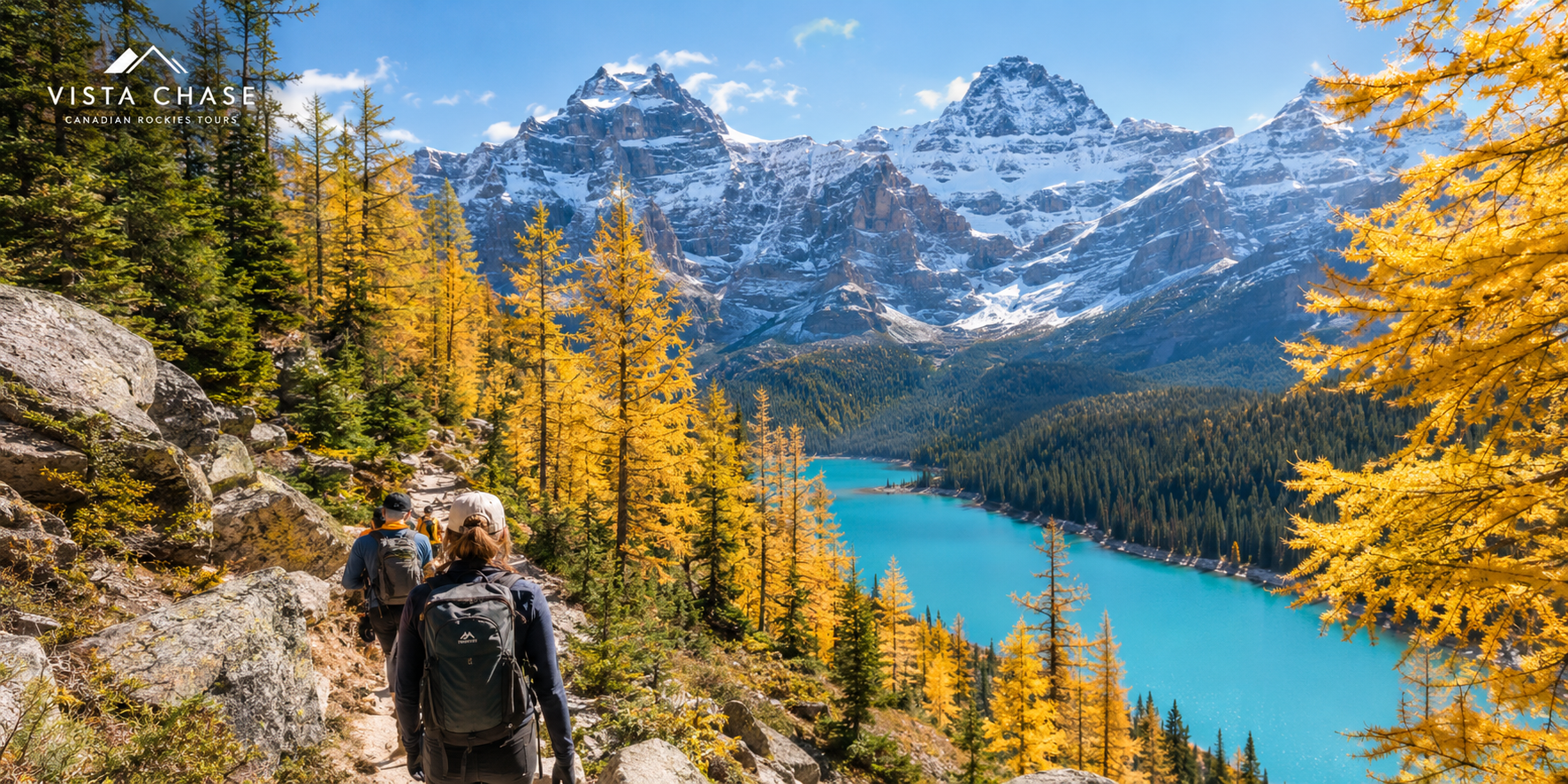
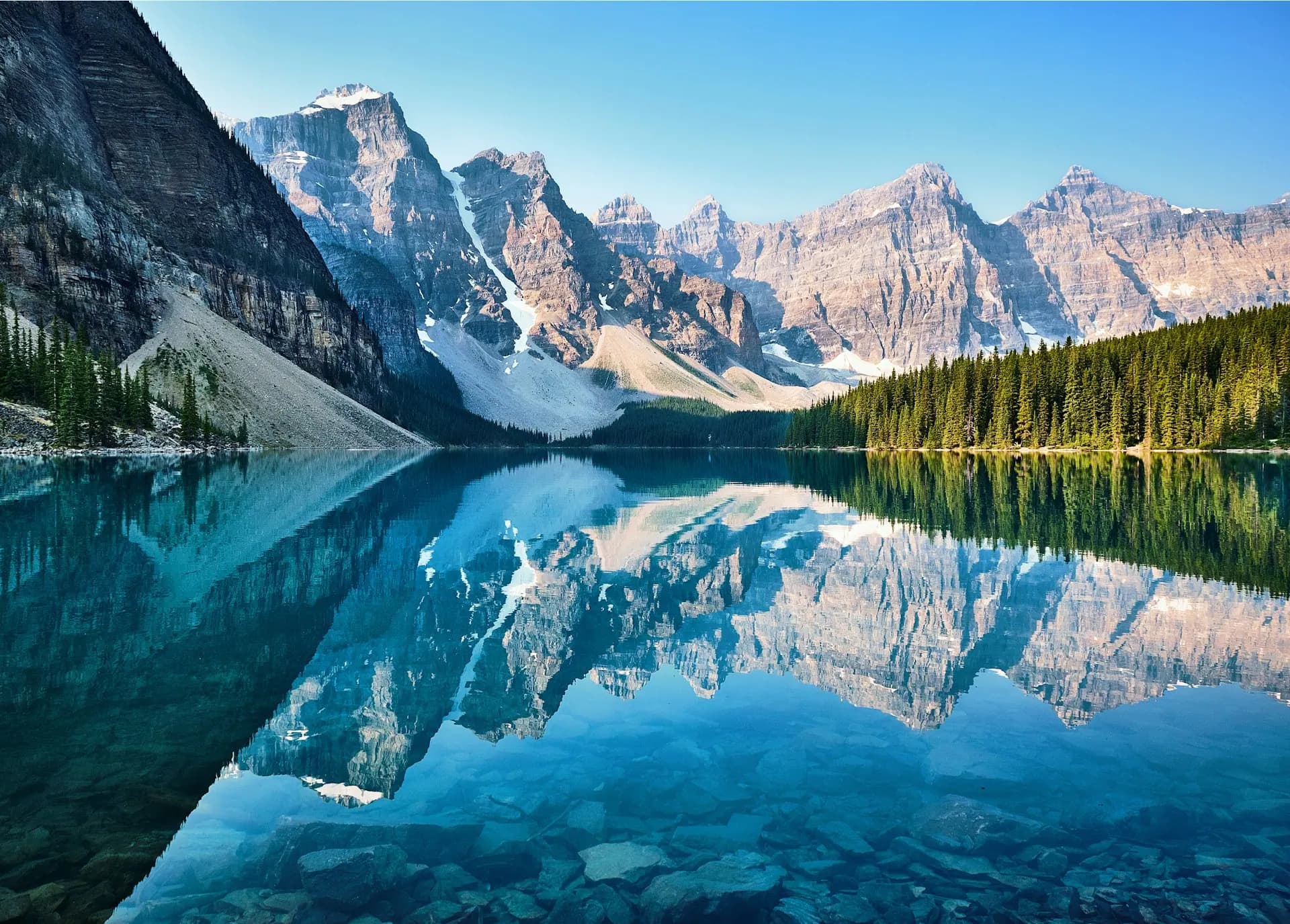
The Larch Valley hike from Moraine Lake is one of the best day walks in the Canadian Rockies: a steady climb through subalpine forest into an open alpine basin, where the Valley of the Ten Peaks rises above the Minnestimma Lakes. For a few weeks each autumn, thousands of larch trees turn gold on top of it.
This guide covers hiking in Banff National Park's most popular larch trail from an Australian traveller's point of view. You will find the distance and elevation gain, how to reach the trailhead now that private cars are banned, the best time to go, bear rules, and a packing list. Whether you are staying in Banff, Canmore or Lake Louise, the Larch Valley trail is worth planning your trip around.
Larch Valley Hike at a Glance
The Larch Valley hike from Moraine Lake is a moderate 8.6 km return walk with about 535 m of climbing, and most people finish in 3 to 5 hours including photo stops.
Most of the climbing comes early, in a run of switchbacks through the forest. Once you reach the valley, the trail flattens out and the effort drops away. Distances and elevation figures vary a little between guidebooks and trail apps, so check the current Parks Canada trail report before you go.
How to Get to the Larch Valley Trailhead from Banff
You cannot drive to the Larch Valley trailhead. Moraine Lake Road is closed to personal vehicles year-round, so every hiker arrives by shuttle, tour or a licensed commercial operator. That includes rental cars, which matters if you are flying in from Australia and planning a self-drive trip.
The road is only open in summer and early autumn, roughly 1 June to mid-October (in 2026 the shuttle ran until 12 October). Outside those dates there is no vehicle access at
all, and Parks Canada advises avoiding high-elevation trails from November to June because of avalanche risk. Always confirm the new season's dates before you lock in
flights.
Your main options:
- Parks Canada shuttle. The cheapest route, running from the Lake Louise Park and Ride. A reservation is required, and late-September seats for larch season disappear within minutes of booking opening. Extra seats are released at 8 am MDT, two days before departure.
- Roam Public Transit. A Roam Reservable Super Pass from Banff includes the Parks Canada Lake Connector shuttle to Moraine Lake.
- Private shuttle or tour. Licensed operators with a Moraine Lake Road licence can collect you from Banff, Canmore or Lake Louise. Vista Chase shuttles include sunrise and golden hour departures with guaranteed access, which suits hikers who want to be on the trail before the crowds.
If you are comparing options, our traveller's handbook to visiting Moraine Lake walks through each one in more detail.
The trailhead sits just past Moraine Lake Lodge, a few minutes' walk from the lakeshore.
Larch Valley Trail Guide: What to Expect Step by Step
The Larch Valley trail Moraine Lake hikers follow is well signed and easy to navigate, with no scrambling. Here is how the day unfolds.
- Forest switchbacks (first 3 km or so). The trail leaves the lake and climbs steadily through subalpine forest in a long series of switchbacks. This is the hard part. Go slowly, drink water and layer down as you warm up.
- Trail junction. Partway up, the Eiffel Lake trail branches off. Follow the signs for Larch Valley.
- The valley opens up. The trees thin out and the larches begin, with the Valley of the Ten Peaks filling the skyline. The gradient eases and the walking becomes gentle.
- Minnestimma Lakes. The small alpine lakes sit in the heart of the valley and make a good place to stop, eat and take photos, especially when the larches are golden and the water is still.
- Turn around or push on. Most hikers return the way they came. If you have the legs and the weather is good, you can carry on to Sentinel Pass.
The descent is quicker than the climb, but the same switchbacks can be hard on the knees, so poles help. Allow time to catch your return shuttle, so check your return shuttle
time before you set off.
Can You Hike Larch Valley Without Going to Sentinel Pass?
Yes. Larch Valley is a complete hike on its own, and most visitors turn around at the Minnestimma Lakes. Sentinel Pass is an optional extension for fitter, better-prepared hikers.
Beyond the valley, the trail steepens onto loose, rocky switchbacks. The extra distance is only about 1.5 km each way and adds roughly 180 m of climbing, but it feels much
harder than the numbers suggest. The reward is a high saddle with sweeping views down into Paradise Valley and back over the Ten Peaks.
Pick Sentinel Pass if the weather is settled, you have started early and you are comfortable on steep, loose ground. Skip it if cloud is sitting on the ridge, snow is on the trail or
your return shuttle time is tight.
Best Time to Hike Larch Valley for Golden Larches
The best time to hike Larch Valley for golden larches is from mid-September to early October, with the peak usually landing between about 20 and 30 September. The colour
window is short, often only 7 to 10 days, and the exact timing shifts each year with the weather.
- Mid-September: the first larches at higher elevation start to turn.
- Late September: most groves are fully golden. This is also when the trail is busiest.
- Early October: needles begin to drop, though some trees stay golden. A windy day or early snow can end the show quickly.
Before peak colour, Larch Valley is still a rewarding summer hike, with green larches, wildflowers and fewer people. The trail is generally walkable from around July, but snow
can linger on higher ground earlier in the season.
To beat the crowds in peak weeks, take the first shuttle of the day and aim to be climbing before 8 am. Weekdays are quieter than weekends. If you want help timing the colour,
our guide to the best Banff tours for fall colours covers what to book and when.
Planning the Larch Valley Hike from Australia
A few details are worth sorting out before you leave home.
- Timing. Larch season is late September to early October, which can overlap with spring school holidays in several Australian states. Book flights, accommodation and shuttles early, because this is one of the busiest windows in Banff.
- Entry requirements. Most Australian citizens flying to Canada need an Electronic Travel Authorization (eTA). Apply through the official Government of Canada website and confirm the current rules before you travel.
- Getting to Banff. Fly into Calgary International Airport (YYC), usually with a connection through Vancouver or another hub. Banff is roughly 90 minutes to two hours from the airport by road.
- Jet lag. Mountain Time is around 16 to 18 hours behind Australia's east coast, depending on daylight saving. Give yourself a day or two to adjust before tackling an 8.6 km alpine climb.
- Weather. Expect a very different September to an Australian spring. Mornings at larch elevation can be near freezing, and snow can arrive without much warning.
- Wildlife. There are no snakes to worry about here, but this is grizzly country. Bear spray and group rules are part of the plan, not an extra (see below).
- Insurance. Check that your travel insurance covers hiking in alpine terrain and emergency rescue.
- Park entry. A valid Parks Canada pass is needed to enter the national park. Check what your shuttle or tour booking already includes.
What to Bring and How to Stay Safe
The area around Larch Valley is prime grizzly habitat. During larch season Parks Canada often restricts the whole valley to groups of four or more, and rangers can enforce it at
the trailhead, with fines for smaller groups. Check the current Parks Canada trail report before you go. If you are travelling as a couple or solo, a guided tour can solve the
group-size problem.
What to pack for the Larch Valley hike:
- Bear spray, within easy reach (not buried in your pack), and knowledge of how to use it
- Layers: a base layer, a warm mid-layer, a windproof and waterproof shell, plus a beanie and gloves
- Sturdy hiking shoes or boots with good grip
- At least 1.5 to 2 litres of water and plenty of snacks or lunch
- Trekking poles for the switchbacks, especially on the way down
- Sunscreen, sunglasses and a hat, because the alpine sun is strong
- A headlamp if you are catching a sunrise shuttle
- A fully charged phone with offline maps, plus a power bank
Make plenty of noise on the forest section, keep your group together and stay on the trail. If you see a bear, do not run, and follow Parks Canada's wildlife guidance.
Larch Valley Hike FAQs
How difficult is the Larch Valley hike from Moraine Lake?
It is rated moderate. The climb is steady rather than technical, with most of the effort in the first few kilometres of switchbacks. There is no scrambling, and fit hikers of most ages manage it.
How long is the Larch Valley hike?
About 8.6 km return. Allow 3 to 5 hours with photo stops. Adding Sentinel Pass takes the total to roughly 11.6 km and 4 to 6 hours.
What is the elevation gain of the Larch Valley hike?
Around 535 m to the Minnestimma Lakes. Sentinel Pass adds roughly another 180 m, for about 725 m in total.
What is the best time to hike Larch Valley?
For the golden larches, mid-September to early October. For fewer people and green scenery, July and August are quieter, though the trail may hold snow early in summer.
Start early in any season.
When is the best time to see golden larches in Larch Valley?
Usually between about 20 and 30 September, but the peak can shift by several days either way. Colour lasts for roughly a week or two before needles fall.
How do you get to the Larch Valley trailhead from Banff?
By shuttle only. Take the Parks Canada shuttle from the Lake Louise Park and Ride, a Roam pass that includes the Lake Connector, or a private shuttle or tour from Banff, Canmore or Lake Louise.
Is Larch Valley suitable for beginner hikers?
Yes, for beginners with reasonable fitness. The trail is well marked and the grade is manageable, but it is a sustained climb at altitude. Go slowly, carry layers and turn around at the lakes if you are tired.
Can you hike Larch Valley without going to Sentinel Pass?
Yes. Most people stop in the valley at the Minnestimma Lakes. Sentinel Pass is an optional, steeper extension.
What should you bring for the Larch Valley hike?
Bear spray, warm layers, a waterproof shell, sturdy footwear, water, snacks, poles, sun protection and offline maps. See the packing list above.
Is Larch Valley open year-round?
Not in practice. Moraine Lake Road closes to all vehicles from mid-October to early June, and Parks Canada advises avoiding high-elevation trails from November to June
because of avalanche risk. Plan for roughly July to early October.
Do you need a shuttle to Moraine Lake for the Larch Valley hike?
Yes, unless you are a registered guest of Moraine Lake Lodge or have an accessible parking placard where permitted. Everyone else needs a Parks Canada shuttle, public transit, a tour or a licensed commercial operator.
Is Larch Valley worth visiting in the fall?
Absolutely. Autumn is when Larch Valley is at its best, with golden larches, fresh snow on the peaks and clear light. It is crowded, so book early and start at first light.
Ready to Hike Larch Valley from Moraine Lake?
The Larch Valley hike from Moraine Lake rewards a moderate effort with some of the best scenery in Banff National Park, especially when the larches turn gold. The main hurdles are logistics: shuttle access, group rules and a short colour window.
Vista Chase takes care of the access part. Book a Moraine Lake sunrise tour or a shuttle from Banff, Canmore or Lake Louise to be on the trail early, then spend your day in the valley rather than in a queue. Message the team with your dates and we will help you plan.