.png)

Banff Trip Planning Guide: How to Plan a Stress-Free Trip to Banff National Park
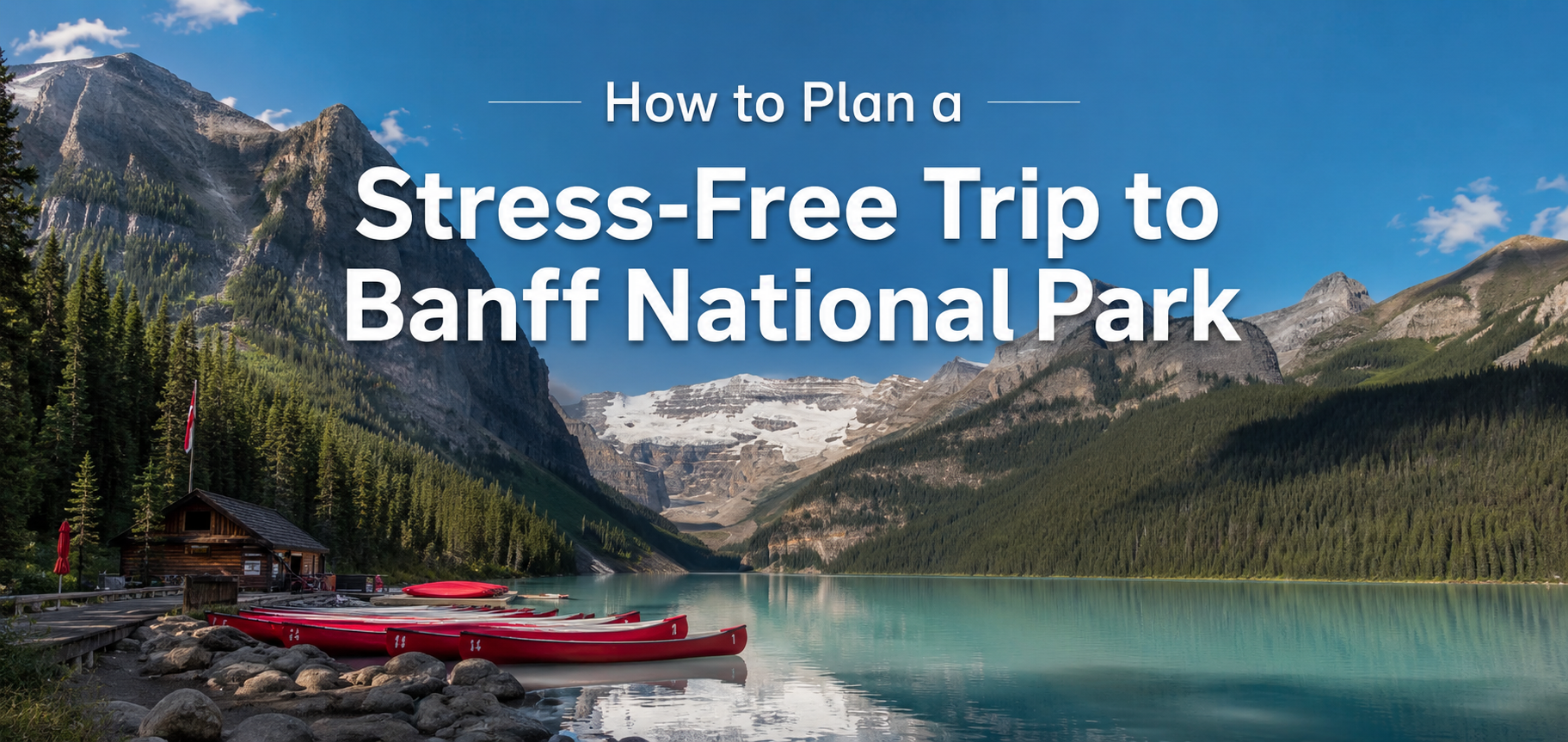
Banff National Park is one of the most breathtaking destinations in the world. Turquoise lakes, jagged mountain peaks, roaming wildlife, and crisp alpine air — it sounds like a dream. And it absolutely can be, if you plan ahead. Without the right preparation, though, a Banff trip can quickly become an exercise in crowded parking lots, missed shuttle windows, and scrambled reservations.
This Banff trip planning guide is here to change that. Whether this is your first time visiting or you are returning for another adventure in the Canadian Rockies, we will walk you through everything you need to know to plan a genuinely stress-free Banff trip from start to finish.
How Many Days Do You Need for a Banff Trip?
One of the first questions first-time visitors ask is how many days to allocate. The honest answer depends on what you want to see, but here is a practical breakdown:
- 3 days: You can cover the Banff townsite, Lake Louise, and one or two other highlights such as Johnston Canyon or the Icefields Parkway.
- 5 days: This is the sweet spot for most visitors. You get time to explore Banff town, Lake Louise, Moraine Lake, the Icefields Parkway, and a day trip toward Jasper.
- 7 days or more: Perfect for travellers who want a relaxed pace, multi-day hikes, wildlife watching at dawn and dusk, and day trips to lesser-known spots like Yoho National Park or Kootenay.
For first-time visitors, we recommend at least five days in the area. Banff rewards those who do not rush. The park is large, the roads can be busy in peak season, and some of the most memorable moments happen when you have the flexibility to linger.
What Is the Best Time to Visit Banff National Park?
Banff is genuinely a year-round destination, but each season offers a very different experience.
Looking to experience Banff in a more romantic and luxurious way? ❤️🏔️ We’ve put together a complete guide covering the best luxury experiences for couples and honeymoon travelers
Summer (June to August)
This is peak season, and for good reason. Wildflowers bloom, all trails are accessible, and the famous lakes reach their most vivid turquoise colour. That said, this is also the busiest period. Parking at Moraine Lake and Lake Louise fills before sunrise. Booking shuttles, tours, and accommodation months in advance is essential.
Fall (September to October)
September is arguably the best month to visit Banff. The crowds thin out noticeably after Labour Day, the larch trees turn golden in mid to late September, and the elk rut makes for incredible wildlife viewing around the townsite. Temperatures are cooler but comfortable for hiking.
Winter (November to March)
Banff in winter is a completely different world. Frozen lakes, ski resorts, dog sledding, and ice walks make it a magical destination for those who enjoy cold-weather adventures. The Banff Upper Hot Springs are particularly popular in winter. Accommodation is easier to find and often more affordable outside of the holiday period.
Spring (April to May)
Spring is the shoulder season. Snow is still melting, some higher trails remain closed, and the lakes have not yet reached their full colour. However, it is quieter and wildlife sightings (especially bears emerging from hibernation) are common. A great time for photographers and those on a tighter budget.
For a stress-free Banff trip, September or early October offers the best combination of beauty, manageable crowds, and pleasant hiking conditions.
Where Should You Stay in Banff?
Your choice of base will shape how your entire trip feels. Here are the main options:
Explore Banff tour booking tips
Banff Townsite
Staying in Banff town puts you right inside the national park. You have easy access to restaurants, shops, the Banff gondola, and key trailheads. It is convenient but can feel busy in peak summer. Book well in advance, as hotels here fill up fast.
Planning a high-end getaway? Check out our Banff luxury travel guide for the best places to stay, dine, and experience the Rockies in style.
Canmore
Canmore is located just outside the national park boundary, roughly 25 minutes from the Banff townsite. It tends to be slightly more affordable and has its own charm, with excellent restaurants and a thriving arts scene. Many travellers use Canmore as their base and drive into Banff each day. Our blog on Canmore vs Banff: Where Should You Stay goes deeper into this comparison if you are weighing up both options.
Lake Louise Village
Staying at Lake Louise puts you closest to the two most iconic lakes in the park. It is quieter than Banff town and a great choice if your priority is early morning access to Moraine Lake and Lake Louise before the shuttle queues build up.
Is Banff Expensive for Tourists?
Banff sits on the higher end of travel costs in Canada, but a stress-free trip does not have to break the bank. Here is what to budget for:
- National Parks Pass: A Parks Canada Discovery Pass covers entry to all Canadian national parks for a full year and pays for itself quickly if you are visiting for more than a few days.
- Accommodation: Budget options exist in Canmore and through hostels in Banff. Mid-range hotels in the townsite average $250 to $400 CAD per night in peak summer.
- Food: Banff has options at every price point, from grab-and-go sandwiches to fine dining. Picking up groceries in Canmore before heading into the park saves considerably.
- Transportation: This is where careful planning pays off. Relying on your own vehicle means navigating restricted access zones, paying for parking, and managing the logistics of Moraine Lake (which has no public parking during peak season). Many visitors find that booking a private or shared tour for key highlights actually simplifies the trip and reduces hidden costs.
If you are looking to see the highlights without the headache of driving, our shared tours and private tours are designed to take care of the logistics so you can focus on the experience.
Do You Need a Car for a Banff Trip?
This is one of the most common questions in any Banff trip planning guide, and the answer has shifted significantly in recent years.
Parks Canada has introduced vehicle restrictions at several key locations, most notably Moraine Lake and the Lake Louise area during peak summer. During restricted periods, private vehicles cannot access these areas at all. You must use a Parks Canada shuttle, book a commercial operator, or hike in from a designated trailhead.
What this means practically: even if you rent a car, you will need an alternative for some of the most iconic stops. Many first-time visitors find this surprising and stressful if they have not planned ahead. Booking a Moraine Lake shuttle or private tour well in advance is the most reliable way to guarantee access.
For getting around Banff townsite, a car is helpful but not essential. The Roam Transit bus network connects Banff, Canmore, Lake Louise, and some trailheads, and works well for visitors staying in town. If your itinerary focuses on the main highlights rather than backcountry exploration, you can manage without a car entirely.
What Are the Must-Visit Places in Banff?
Banff National Park covers over 6,600 square kilometres, so narrowing down a list is genuinely difficult. Here are the highlights most visitors want to see, and some planning notes for each:
Moraine Lake
The image on the old Canadian $20 bill. Nothing quite prepares you for how vivid that water is in person. Access is restricted during peak season, so plan ahead. Our guide on how to get to Moraine Lake without a car covers your options in detail.
Lake Louise
One of the most photographed lakes in the world, and still worth every photograph. The Fairmont Chateau Louise sits right on the lakeshore. Early morning light here is extraordinary.
Johnston Canyon
An accessible and rewarding hike along a canyon floor with waterfalls and ink pots. Manageable for most fitness levels and genuinely stunning. Go early to beat the crowds.
Icefields Parkway
The 230-kilometre drive from Lake Louise to Jasper is considered one of the most scenic road trips on Earth. Columbia Icefield and Peyto Lake are highlights along the route.
Banff Townsite
Do not overlook the town itself. Banff Avenue has excellent restaurants, the Whyte Museum, and the Cave and Basin National Historic Site. The Banff Upper Hot Springs and the Banff Gondola are both worth an evening.
Two Jack Lake and Vermilion Lakes
These quieter spots near town offer sunrise and sunset views that rival anything in the park, with far smaller crowds. Perfect for wildlife photography.
How to Get Around Banff Stress-Free
Transportation is the single biggest stress point for Banff visitors. Parking fills before 7am at major trailheads in summer. Shuttle queues can be long. And some areas are completely off-limits to private vehicles during peak season.
Here is what we recommend for a genuinely stress-free approach:
- Book shuttles and tours in advance: Do not leave this until you arrive. The most popular routes, including Moraine Lake and Lake Louise, sell out weeks ahead in summer.
- Consider a private tour for key highlights: A private tour means your own vehicle, guide, and flexible itinerary. No queuing, no parking stress, and local knowledge built in. Ideal for families, couples, or anyone who wants a more curated experience.
- Use Roam Transit for in-town travel: The bus network is reliable and affordable for getting between Banff and Canmore, and to some trailheads.
- Plan your days around access times: If you are driving, arrive at trailheads before 7am during peak summer. For restricted access areas, your only options are the Parks Canada shuttle or a licensed commercial operator.
Vista Chase offers both private tours and shared tours departing from Banff and Canmore, designed specifically to take the logistics off your plate. We handle the access, the route, and the timing, so you can spend your energy actually enjoying the park.
Tips for Planning a Banff Trip Without Stress
Based on everything we know about what makes a Banff trip go smoothly, here are the practical things that make the biggest difference:
- Book accommodation early: Especially if visiting between June and September. Popular properties in Banff town sell out months ahead.
- Purchase your Parks Canada pass before arriving: Available online. Saves time at the gate.
- Plan your Moraine Lake access on day one: This is the most logistically complex part of a Banff itinerary. Sort it first.
- Pack layers: Mountain weather changes quickly. Even in summer, temperatures can drop significantly in the afternoon.
- Download the Parks Canada app: Has trail conditions, park alerts, and shuttle schedules in one place.
- Allow buffer time: Traffic on the Trans-Canada Highway through Banff can be slow, and wildlife on roads can cause unexpected delays (which are honestly some of the best moments of any trip).
- Book tours for the highlights: The easiest way to guarantee you see what you came for, without the stress of logistics, is to let a local operator handle it.
Can You Plan a Banff Trip Without Stress? Yes, Here Is How
The short answer is yes, but it requires planning ahead rather than winging it on arrival. Banff rewards those who do the groundwork. The visitors who have the most relaxed, memorable trips are usually the ones who sorted their Moraine Lake access weeks before leaving home, booked their accommodation during the shoulder season, and had a rough daily plan without over-scheduling every hour.
If you want to take the planning burden off entirely, working with a local tour operator is the single most effective thing you can do. Vista Chase runs private tours, shared group tours, shuttles, and multi-day tour packages — all designed to remove the logistical friction from your Banff experience so you can simply show up and enjoy.
Where Should You Stay in Banff for First-Time Visitors?
For first-timers, our recommendation is the Banff townsite if budget allows, or Canmore if you want more affordable options without sacrificing convenience. Both work well as bases for a five-day itinerary.
Banff town gives you walkability and proximity to the park. Canmore gives you more restaurant variety, slightly lower prices, and a quieter vibe after a long day on the trails. Whichever you choose, being within 30 minutes of the park gate puts everything within reach.
Frequently Asked Questions About Planning a Banff Trip
How many days do you need for a Banff trip?
Most first-time visitors get the most out of Banff with five days. This allows time to cover the main highlights at a relaxed pace. Three days is a minimum if your schedule is tight, and seven days is ideal for those who want to include Jasper or multi-day hiking.
What is the best time to visit Banff National Park?
September is the sweet spot for most travellers. Crowds are smaller than in July and August, the larch trees turn golden, wildlife activity is high during the elk rut, and the weather is still pleasant for hiking. Summer (June to August) offers the most trail access and warmest temperatures but is significantly busier.
How do I plan a trip to Banff on a budget?
Buy an annual Parks Canada Discovery Pass, stay in Canmore rather than Banff town, pick up groceries rather than eating out every meal, and use Roam Transit for in-town travel. Booking shared tours rather than private tours for key highlights also helps keep costs manageable.
Do I need a car for a Banff trip?
Not necessarily. Key areas like Moraine Lake have restricted vehicle access during peak season, so even car renters need alternative transport for those stops. Roam Transit covers many routes, and booking commercial tours or shuttles handles the rest. A car is useful for flexibility on the Icefields Parkway but is not strictly required for a great trip.
Is Banff expensive for tourists?
Banff is one of Canada's more expensive destinations, particularly for accommodation in peak summer. That said, the national park itself is very good value once you have a Parks Canada pass. Eating strategically, staying in Canmore, and booking tours in advance rather than paying premium last-minute rates all help significantly.
What are the must-visit places in Banff?
Moraine Lake, Lake Louise, Johnston Canyon, the Icefields Parkway, Two Jack Lake, and the Banff townsite itself. If you have time, Yoho National Park and Peyto Lake are also outstanding.
Can you plan a Banff trip without stress?
Absolutely. The key is planning the logistical pressure points (Moraine Lake access, accommodation, shuttles) well in advance, allowing buffer time in your daily schedule, and considering a local tour operator to handle the access logistics for key highlights.
Where should I stay in Banff for first-time visitors?
Banff town is ideal for convenience and proximity to the park. Canmore is a great alternative if you want lower accommodation costs and a slightly quieter base. Both are within easy reach of all major highlights.
Ready to Plan Your Stress-Free Banff Trip?
The Canadian Rockies are genuinely one of the most spectacular places on earth, and Banff National Park is the crown jewel. With the right planning, your trip here can be everything you imagined and more.
If you would like help with the parts that take the most planning, Vista Chase is here for it. Browse our private Banff tours, shared tours, and shuttle services, or get in touch with our team at vistachase.com/contact-us to build a Banff itinerary around your schedule.
We will take care of the logistics. You bring the sense of wonder.