.png)

Is Banff Worth Visiting in the Shoulder Season?
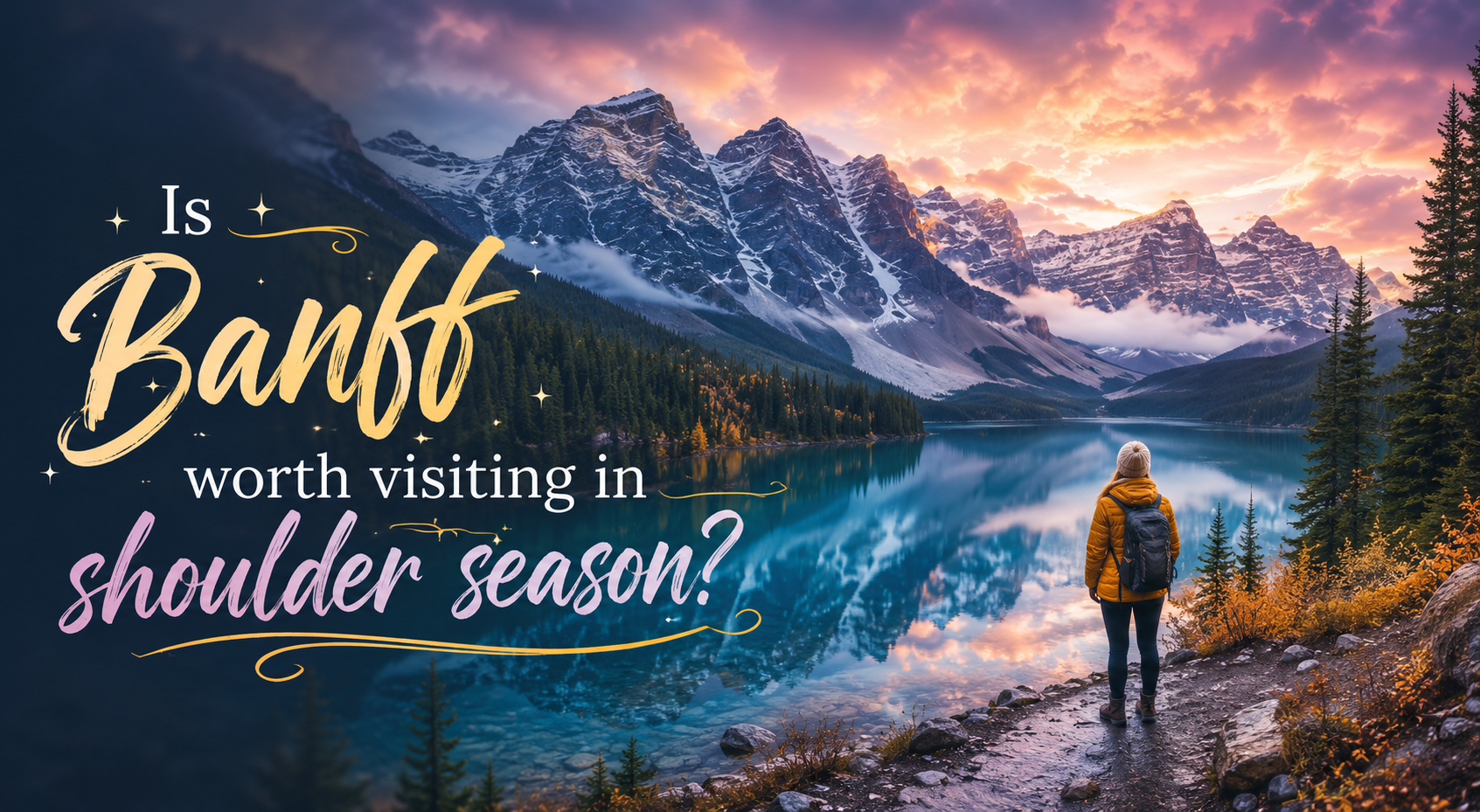
Your Honest, No-Fluff Guide to Spring and Fall in the Canadian Rockies
Let's be honest, most people Google Banff and immediately see two things: jaw-dropping summer photos of turquoise lakes and golden fall foliage, or dreamy winter shots of snow-capped peaks. What rarely comes up? The shoulder season those quieter, in-between weeks in spring (April to mid-June) and fall (mid-September to October) when the crowds thin out, the prices drop, and Banff shows a completely different side of itself.
So is Banff worth visiting in the shoulder season? Short answer: absolutely yes but with a few things to know before you book.
This guide covers everything: what the shoulder season actually looks and feels like, what's open, what's closed, what you'll save, and how to make the most of every day you're there.
What Exactly Is "Shoulder Season" in Banff?
Shoulder season in Banff typically refers to two windows:
- Spring shoulder season: April through mid-June
- Fall shoulder season: Mid-September through October
These are the gaps between peak summer (late June to mid-September) and peak winter (December to March). The park is still very much open and very much beautiful it's just a different kind of beautiful. Snow lingers on the peaks well into May. The larches turn gold in late September. Wildlife becomes more visible as animals fatten up for winter. And most importantly, the parking lots at Lake Louise don't look like a Black Friday sale.
The Honest Pros and Cons of Visiting Banff in the Shoulder Season
The Pros (There Are Many)
1. Way Fewer Crowds
This is the big one. Peak summer in Banff is genuinely overwhelming at the most popular spots. Moraine Lake Road is closed to personal vehicles from late May through mid-October, meaning access requires a shuttle or a licensed tour. Lake Louise parking fills before sunrise. Johnston Canyon trails get backed up. Shoulder season changes all of this you can actually stand at the Rockpile above Moraine Lake and hear the wind instead of a hundred other cameras clicking.
2. Moraine Lake: Nature's Timing Is Everything
Moraine Lake is arguably one of the most photographed spots in North America. In late September and early October, the larches surrounding the lake turn a brilliant gold creating one of the most dramatic natural colour shows on the continent. Many photographers consider this the single best time to visit. The lake is still accessible (Moraine Lake Road typically closes in mid-October), the reflections are stunning, and the golden larch trees frame every shot perfectly.
3. Lower Prices Across the Board
Hotels, vacation rentals, and tour packages in Banff drop noticeably in shoulder season. You can often find the same quality lodging for 20–40% less than peak summer rates. If budget is a factor and for most travelers it is the shoulder season is genuinely smarter.
4. Wildlife Viewing Is Exceptional
Spring and fall are among the best times for wildlife in Banff. In spring, bears come out of hibernation and are often spotted along the Bow Valley Parkway. In fall, elk rut season (late September to mid-October) is a spectacle of bulls bugling in the early morning, herds moving through Banff townsite, wildlife visible right from the main road. Moose, deer, bighorn sheep, and mountain goats are all more active in cooler temperatures.
5. The Icefields Parkway Is Quieter
The Icefields Parkway, the highway between Banff and Jasper, is genuinely one of the most scenic drives in the world. In summer, it can feel frustratingly busy. In spring and fall, you can pull over at every viewpoint, take your time at Bow Lake and Peyto Lake, and experience the route the way it was meant to be experienced: slowly, quietly, and without a lineup at every pullout.
The Cons (Be Honest About These)
1. Some Amenities Close or Reduce Hours
Not everything stays open year-round. In spring, some trails are still snow-covered or closed for wildlife protection. In fall, some campgrounds close early, certain gondola operating schedules are reduced, and a few popular visitor services wrap up before the end of October. Always check current conditions before you go.
2. The Weather Is Unpredictable
Banff sits in the Canadian Rockies at elevations that don't care about your itinerary. A warm April morning can become a snowstorm by noon. October can give you perfect bluebird days or dump 20 centimetres of snow overnight. Packing in layers isn't a suggestion, it's a requirement. That said, with the right gear and a flexible mindset, the unpredictable weather is part of what makes shoulder season feel so adventurous.
3. Moraine Lake Access Has a Hard End Date
Moraine Lake Road typically closes in mid-October exact dates vary by year depending on snow and Parks Canada conditions. If fall colours and Moraine Lake are both on your list, you're working with a narrow window: roughly mid-September to mid-October. Book accordingly.
4. Daylight Hours Are Shorter in Fall
By late October, sunset in Banff is around 6:00 PM. You get fewer usable daylight hours compared to summer's near-endless evenings. Plan your itinerary around the earlier darkness, especially if you're chasing golden hour photography.
What to Do in Banff During Shoulder Season
Spring (April to Mid-June)
Spring in Banff is a story of transformation. The snow is melting, waterfalls are at their most powerful from snowmelt, and the park is waking up. Here's what's worth your time:
- Johnston Canyon: One of the most accessible and dramatic hikes in the park, Johnston Canyon runs through a narrow limestone gorge and past cascading waterfalls. In early spring, the falls are absolutely thundering with snowmelt and the crowds haven't arrived yet.
- Bow Falls: A quick stop right in Banff town, Bow Falls is dramatically powerful in spring when glacier runoff peaks.
- Wildlife Watching Along the Bow Valley Parkway: The Bow Valley Parkway is one of the best wildlife corridors in the park. Spring is prime time for bear spotting, wolf sightings, and watching elk with newborn calves.
- Banff Gondola: Operating year-round, the Banff Gondola takes you to the summit of Sulphur Mountain for 360-degree views of six mountain ranges. In spring, the contrast of snow-dusted peaks against blue sky is outstanding.
- Banff Townsite Exploration: Banff Avenue, the Cave and Basin National Historic Site, the Whyte Museum, and the Fairmont Banff Springs Hotel grounds are all worth exploring without the summer shoulder-to-shoulder pedestrian traffic.
Fall (Mid-September to October)
Fall is honestly many experienced travellers' favourite season in Banff. Here's why:
- Larch Season at Moraine Lake and Larch Valley: The golden larches are the headline event. Typically peaking in late September, the trail into Larch Valley above Moraine Lake becomes one of the most visually stunning hikes in the country.
- Lake Louise in Fall: With the summer shuttle crowds thinned out and the mountains still vivid, Lake Louise in fall is quieter, cooler, and every bit as gorgeous.
- Elk Rut Season: If you've never heard a bull elk bugling at dawn, add it to your list. Late September to mid-October is rut season, and elk are everywhere including right in Banff town.
- Icefields Parkway Day Trip: Autumn colours along the Icefields Parkway are spectacular. The aspens and larches turning gold against the grey rock and snow-dusted peaks create a colour palette you won't find anywhere else.
- Less Crowded Hikes: Trails like Sentinel Pass, Plain of the Six Glaciers, and the Plain of Six Glaciers above Lake Louise are all far more enjoyable with autumn's cooler temperatures and thinner crowds.
Getting Around Banff in the Shoulder Season: What You Actually Need to Know
This is where things get practical and where a lot of first-time visitors make mistakes.
Moraine Lake Access in Shoulder Season
Moraine Lake Road is restricted to personal vehicles from late May through mid-October. In shoulder season, this restriction is active in fall (until mid-October) and begins to kick in toward the end of spring. That means if you want to see Moraine Lake during shoulder season, you need a shuttle or a licensed tour operator, not a rental car.
Vista Chase operates Moraine Lake sunrise shuttles from Banff, Canmore, and Lake Louise Village, with guaranteed commercial vehicle access, no lottery, no 4:00 AM panic at a remote parking lot. Sunrise and Golden Hour options are both available, with round-trip pickup included.
Do You Need a Car?
This is one of the most common questions, and the honest answer is: it depends. If you're planning to explore Banff town, take a gondola, walk to Bow Falls, and stick to the main townsite, you can get around without a car. But if Moraine Lake, Johnston Canyon, Lake Louise, or the Icefields Parkway are on your list, you'll need either a rental or a guided tour.
For shoulder season travellers who want to cover multiple destinations without the stress of winter road conditions or the hassle of fighting for parking, a guided tour is genuinely the smarter move. The roads in spring can still be icy. Fall can bring early snowfall. And for unfamiliar drivers, the mountain roads demand respect.
How Vista Chase Makes Shoulder Season Easy
Vista Chase runs tours year-round through Banff, Yoho, Jasper, and the Icefields Parkway including throughout the shoulder season. Here's what that looks like in practice:
Shared Tours: Social, Affordable, and Expertly Guided
The Heart of Banff Shared Tour runs year-round and covers Banff's top highlights Bow Falls, the Banff Gondola, Lake Minnewanka, Surprise Corner, the Hoodoos, and more in a small group of up to 12 guests. It's one of the most efficient and affordable ways to cover the town's best spots in a single day, with a knowledgeable local guide providing context you simply won't find in a guidebook.
For a broader Rockies experience, the shared tours page covers everything from the Icefields Parkway to winter ice bubble tours at Abraham Lake.
Private Tours: Complete Flexibility for Couples, Families, and Small Groups
The Banff Private Tour is Vista Chase's most popular offering a fully customizable day in a luxury SUV with your own dedicated local guide. Stop where you want, linger as long as you like, and get real-time recommendations based on the day's conditions and crowd patterns. In shoulder season, this flexibility is especially valuable: if a trail is icy, your guide reroutes. If wildlife appears off the main road, you stop. The day bends to you.
Explore the full range of private tour options from Banff day trips to Icefields Parkway and Jasper adventures.
Multi-Day Packages: The Complete Rockies Experience
If you're spending more than a day or two, Vista Chase's multi-day tour packages handle everything from airport transfers to daily itineraries across Banff, Yoho, and Jasper. The shoulder season is ideal for multi-day trips, prices are lower, attractions are quieter, and your guide can focus time on the spots that are genuinely at their best in spring or fall.
Practical Tips for Your Shoulder Season Visit
Pack for All Four Seasons in One Day
This is not an exaggeration. In April or October, you can wake up to frost, hike in sunshine, get hit by a squall at lunch, and end the day back in a light jacket. Layering is essential. Waterproof outer layers, warm mid-layers, and trail shoes or light hiking boots with grip are non-negotiable.
Book Moraine Lake Access Early
Even in shoulder season, Moraine Lake access via tour or shuttle fills up. If the larch season (late September) is your goal, book weeks in advance. It's one of the most in-demand photography windows in Canada.
Check Trail Conditions
In spring, high-elevation trails can be snow-covered and dangerous well into June. Parks Canada publishes daily trail condition reports at parks.canada.ca. Check before you head out, especially for anything above treeline.
Start Early
Even without summer crowds, shoulder season rewards early risers. Sunrise at Moraine Lake or Lake Louise in fall is extraordinary. Wildlife is most active in the early morning. And you'll have iconic viewpoints to yourself for at least the first hour of daylight.
Use a Licensed Tour Operator for Restricted Areas
Some of the most popular areas, Moraine Lake chief among them, require commercial vehicle access in peak and shoulder season. Using a licensed operator removes all of that logistical stress and ensures you actually get in.
Is Banff Worth Visiting in the Shoulder Season? The Verdict.
Yes. Without question.
The shoulder season isn't a compromise. For many experienced travellers, it's the preferred window. The light is different. The crowds are manageable. The prices are better. And the park does things in the spring and fall larch season, elk rut, thundering waterfalls, bear sightings that summer simply can't replicate.
The main thing to know going in is this: shoulder season rewards the prepared traveller. Check conditions. Book your Moraine Lake access before you arrive. Pack layers. And consider a guided tour especially if you want to cover multiple destinations and make the most of every day.
Vista Chase runs Banff National Park tours year-round, with shoulder season options for every travel style and budget. Whether you want a single shared tour day or a fully customized multi-day Rockies experience, the mountains are waiting.
Frequently Asked Questions
Is Banff open during shoulder season?
Yes, Banff National Park is open year-round. Some seasonal amenities and campgrounds may have reduced hours or closures in shoulder season, but the park itself, its major attractions, and guided tours all operate throughout spring and fall.
When is larch season in Banff?
Larch season in Banff typically peaks in the last two weeks of September. The golden larches around Moraine Lake, Larch Valley, and Lake Louise are the headline attraction. Exact timing varies year to year with weather aiming for late September for the best colour.
Can you see Moraine Lake during the shoulder season?
Yes, but access is restricted to licensed commercial vehicles from late May through mid-October. Personal vehicles cannot drive up Moraine Lake Road. Book a shuttle or guided tour in advance to guarantee access during this period.
What is the weather like in Banff in spring and fall?
Variable and unpredictable. Spring (April to June) can range from mild sunny days to late snowfalls and freezing overnight temperatures. Fall (September to October) is similar, brilliant warm days are common, but early snowstorms can arrive without much warning. Pack layers and waterproof gear regardless of the forecast.
Is Banff cheaper in shoulder season?
Generally yes. Hotel rates, tour prices, and accommodation costs are typically 20–40% lower in shoulder season compared to peak summer. It's one of the most practical reasons to consider a spring or fall visit.
What wildlife can you see in Banff in shoulder season?
Spring is excellent for bear sightings along the Bow Valley Parkway as bears emerge from hibernation. Fall brings elk rut season (late September to mid-October), with bulls bugling and herds visible throughout the park. Wolves, moose, bighorn sheep, mountain goats, and coyotes are also commonly spotted.
Ready to See Banff Without the Crowds?
Vista Chase offers guided tours of Banff, Yoho, Jasper, and the Icefields Parkway throughout the year including all shoulder season windows. Browse shared tours, private tours, and multi-day packages to find the right fit for your trip. Have questions? Get in touch the Vista Chase team knows these mountains in every season.