.png)

Lake Louise & Moraine Lake Tour in One Day:
The Complete 2026 Guide to Visiting Both Iconic Lakes
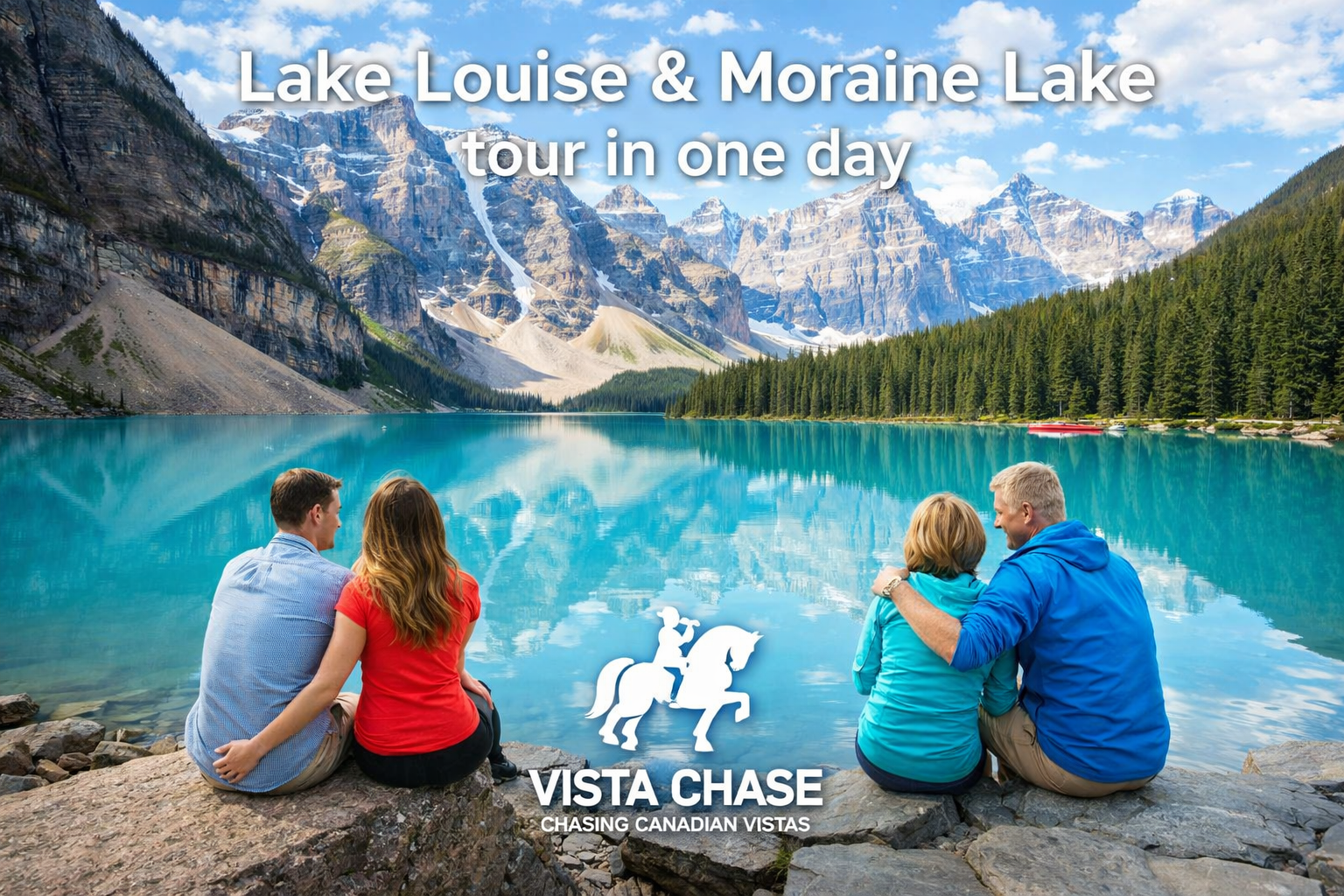
Imagine standing at the edge of a lake so impossibly blue it feels like a scene lifted straight from a dream. Now imagine doing that twice — in a single day. That is exactly what a Lake Louise and Moraine Lake tour in one day gives you.
Nestled deep within Banff National Park in Alberta, Canada, these two glacial lakes are among the most photographed and celebrated natural landmarks on Earth. Lake Louise — a glassy turquoise mirror cradled beneath the Victoria Glacier — has been captivating travellers since the 1880s. Moraine Lake, set against the Valley of the Ten Peaks, is arguably even more stunning, its vivid azure waters so iconic they once graced the back of the Canadian twenty-dollar bill.
Visiting both in a single day is entirely achievable, but it requires smart planning. Parking fills before sunrise. Moraine Lake Road is closed to private vehicles year-round. Crowds peak by mid-morning. Get it wrong and you spend your day in traffic; get it right and you return home with memories that last a lifetime.
This guide — crafted with over eight years of travel writing experience and deep knowledge of the Canadian Rockies — will walk you through everything you need to know: the best itinerary, how to get there, what to expect at each lake, what to wear, the science behind those otherworldly colours, and insider tips that most tourists never discover.
If you're planning to experience one of Canada’s biggest festivals, check out this complete guide to the Calgary Stampede 2026 to explore everything from events to travel tips.
Why Visit Lake Louise and Moraine Lake Together?
The two lakes sit only about 14 kilometres apart — a fifteen-minute drive under normal conditions. Their proximity makes combining them on a single itinerary not just possible but highly efficient. Yet most visitors make a common mistake: they treat the day casually, arriving when they feel like it, only to discover that both destinations become genuinely chaotic by 9 or 10 in the morning.
Lake Louise and Moraine Lake represent two distinct visual experiences. Lake Louise is grandiose and wide, backed by the imposing Fairmont Chateau and framed by mountains that feel almost theatrical. Moraine Lake is more intimate, its turquoise hue deeper and more vivid. Together they offer a complete portrait of what makes the Canadian Rockies so extraordinary.
Both lakes are part of a UNESCO World Heritage Site within Banff National Park. Since 2023, Parks Canada has permanently banned personal vehicles from Moraine Lake Road year-round. Visiting Moraine Lake now requires either a Parks Canada shuttle (which books out months in advance), a commercial tour, public transit, cycling, or walking the 10-kilometre road on foot. This makes guided tours not just convenient but often the only realistic option for most travellers.
Understanding the Science: Why Are These Lakes So Impossibly Blue?
One of the most common questions visitors ask is deceptively simple: why does the water look like that? The answer involves glaciers, physics, and millions of years of geological history.
Both Lake Louise and Moraine Lake are glacially-fed. As glaciers move across bedrock, they grind the underlying rock into an extraordinarily fine powder known as glacial rock flour. This powder is carried by glacial meltwater into the lakes below, where it remains suspended in the water column rather than sinking to the bottom.
When sunlight strikes this suspended rock flour, the tiny particles refract and scatter the blue and green portions of the light spectrum far more than other wavelengths. The result is that distinctive, almost surreal turquoise-to-azure colour that photographers everywhere struggle to capture accurately.
The colour is not static. In early spring the water can appear grey or murky because rock flour concentrations are low. By late June, as snowpack and glaciers begin releasing significant meltwater, the colour intensifies dramatically. July and August represent peak colour season. If you are visiting specifically for the most photogenic turquoise, plan your trip between late June and early September.
Moraine Lake itself was formed approximately 14,000 years ago as receding glaciers left behind a massive accumulation of rock and sediment — the moraine — which acts as a natural dam holding back glacial meltwater. The rockpile viewpoint that has made Moraine Lake globally famous is actually the crest of this glacial debris.
A Brief History: The Stories Behind These Legendary Lakes
Lake Louise: From Emerald Lake to Royal Namesake
Lake Louise was well known to the Stoney Nakoda First Nations people long before European explorers arrived. In their language, the lake is called Ho-run-num-nay, meaning Lake of the Little Fishes. Thomas Edmonds Wilson was the first non-Indigenous person to visit, guided to the lake in 1882 by a Stoney Nakoda guide named Edwin Hunter. Wilson named it Emerald Lake, but it was later renamed in honour of Princess Louise Caroline Alberta, the fourth daughter of Queen Victoria.
The Fairmont Chateau Lake Louise began as a modest wooden cabin built by the Canadian Pacific Railway in 1890, evolving over decades into the iconic landmark that now dominates the eastern shoreline.
Moraine Lake: The Valley of the Ten Peaks
Moraine Lake was named in 1899 by explorer Walter Wilcox, who named it after the geological feature responsible for its formation. The ten peaks looming above the lake — collectively known as the Wenkchemna Peaks — became one of the defining images of the Canadian Rockies, reproduced for decades on the back of the Canadian twenty-dollar bill.
Today Moraine Lake appears on more travel bucket lists than perhaps any other natural location in Canada. Its image has been used in the login screen for Windows 10, multiple Bing homepage features, and as a detail in the video game The Last of Us.
Getting There: Transportation Options for 2026
Guided Tours: The Most Reliable Option
For most visitors, a commercial guided tour is the smartest choice. Tour operators hold guaranteed access to Moraine Lake Road, which is permanently closed to personal vehicles. Parking at Lake Louise lakeshore fills before 6 am in peak season, meaning that even visitors with a vehicle will struggle without arriving in the middle of the night.
Guided tours typically depart from Banff, Canmore, or Lake Louise Village, include round-trip transportation in small-group vehicles with panoramic windows, and are led by knowledgeable local guides who provide cultural, geological, and historical commentary throughout. Tour options range from early-morning sunrise experiences to standard daytime sightseeing tours of four to five hours. Prices generally range from around CAD 140 to CAD 200 per adult depending on the operator and inclusions.
Parks Canada Shuttle
Parks Canada operates a reservation-based shuttle to Moraine Lake and Lake Louise during peak season. Reservations open months in advance and sell out within minutes of release. If you are planning far ahead, this is a budget-friendly option — but the competitive system makes it unreliable for most travellers booking with less than several months of lead time.
Public Transit
The Roam Transit public bus system operates between Banff, Canmore, and Lake Louise. However, public transit does not serve Moraine Lake directly given the road restriction. It is useful for reaching Lake Louise but does not solve the Moraine Lake access challenge on its own.
Cycling and Walking
Moraine Lake Road is accessible by bicycle and on foot year-round. The one-way distance is 10 kilometres, meaning a 20-kilometre round trip. This is a popular option for fit, adventurous travellers but impractical for most leisure visitors combining both lakes in a single day.
The Perfect One-Day Itinerary: Lake Louise and Moraine Lake
Early Morning: Departure and the Drive Through the Rockies
Most recommended tours depart from Banff between 6:30 am and 8:30 am. Sunrise experiences depart earlier — sometimes as early as 4:00 am — timed to arrive at Moraine Lake before first light. The drive along the Bow Valley Parkway is itself a scenic journey offering opportunities to spot elk, deer, bighorn sheep, and occasionally bears in the golden morning light.
First Stop: Lake Louise
Many daytime tours visit Lake Louise first. At the lakeshore your guide will provide context about the lake's history, geology, and surrounding peaks. You will have free time to walk the flat paved lakeshore trail, explore the Fairmont Chateau gardens, or rent a canoe from the boathouse (available mid-June through September, approximately CAD 160 to 165 per hour).
The Fairview Lookout Trail is a 2.3-kilometre round trip with 156 metres of elevation gain, offering a panoramic view over the lake. The full Lake Louise Lakeshore Trail is 4.5 kilometres return and follows the northern shore to the Plain of Six Glaciers, where a historic teahouse operates during summer. On a standard guided tour, allow approximately 30 minutes to one hour at Lake Louise.
Mid-Morning: The Drive to Moraine Lake
The journey from Lake Louise to Moraine Lake covers approximately 14 kilometres via the Valley of the Ten Peaks Road, taking roughly 20 to 25 minutes. As Moraine Lake comes into view for the first time around a bend in the road, passengers on guided tours are routinely reduced to silence. The lake reveals itself all at once: ten glacier-capped peaks, an expanse of turquoise so vivid it seems painted, and an absolute stillness that makes the scene feel almost sacred.
Moraine Lake: The Crown Jewel of the Canadian Rockies
Your time at Moraine Lake is the emotional centrepiece of the day. Begin with the Rockpile Trail, a short 300-metre walk up the moraine itself that delivers the iconic elevated view over the lake and all ten peaks. This is the most photographed viewpoint in Canada, and seeing it in person is a genuinely overwhelming experience for most visitors.
From the base of the rockpile, the lakeshore trail runs along the northern edge of the lake through pine forest with constant views across the water. Canoe rentals are available at the dock on a first-come, first-served basis at approximately CAD 160 per hour. On a sunrise tour, visitors arrive in darkness and watch as the first rays of sunlight ignite the glaciers and snowfields above the western shore in gold, orange, and pink while the lake shifts from gunmetal to its full glorious turquoise.
Return Journey and Additional Stops
Many operators include bonus stops on the return journey to Banff. Common additions include Vermilion Lakes — a trio of shallow lakes west of Banff offering exceptional wildlife viewing — and the Mount Norquay Lookout for sweeping panoramic views. Standard tours return to Banff between 12:15 pm and 5:15 pm. Sunrise tours typically return by late morning, leaving the remainder of the day free.
What to Wear and Pack: A Practical Checklist
Layers are non-negotiable. Even in July and August, mornings at Moraine Lake can be well below 10°C. A warm mid-layer and a wind-resistant outer shell are essential.
Waterproof footwear. Lakeshore trails can be damp and muddy. Sturdy hiking shoes with waterproof membranes are recommended over trainers.
Sunscreen and sunglasses. UV exposure increases at altitude and the reflective surface of the lakes amplifies it further. Apply SPF 50+ and wear polarised sunglasses to reduce glare.
A reusable water bottle. Many guided tours provide water refills. Note that lake water is not potable without filtration and treatment despite its beautiful appearance.
Camera with fully charged batteries. Cold temperatures drain batteries faster than expected. Bring a spare battery or power bank if photography is a priority.
Cash or card for optional activities. Canoe rentals, café purchases, and souvenirs are not typically included. Budget an additional CAD 50 to 200 per person.
National Park Pass. Entry to Banff National Park requires a valid Parks Canada pass. Many guided tours include this — confirm when booking.
Insider Tips: What Most Visitors Get Wrong
- Arrive before sunrise or book accordingly. Parking at Lake Louise lakeshore has been full by 4:30 am on peak summer mornings. Even on guided tours, earlier departures mean lighter crowds and better photography conditions.
- Do not rely on securing a Parks Canada shuttle at the last minute. The reservation system opens months in advance and sells out almost immediately. A commercial tour is your most dependable option for accessing Moraine Lake.
- The Rockpile view is not optional. It is approximately 300 metres long and takes under 15 minutes. Missing it means missing the most famous viewpoint in Canada.
- Book canoe rentals for the morning. Afternoon and midday queues can be extremely long. If paddling is on your list, plan to be at the canoe docks within the first 30 minutes of your arrival.
- Moraine Lake Road is open from approximately June 1 to October 13 each year. Always check current Parks Canada guidelines before travelling.
- Midweek visits are significantly less crowded than weekends. Tuesday through Thursday mornings represent the best balance of accessibility and reduced crowds during peak season.
- Dress warmer than you think you need to. Even in August, temperatures at the lake before 8 am can feel genuinely cold.
- Wildlife encounters are possible at any time on the drive between Banff and the lakes. Elk, deer, bighorn sheep, and bears have all been spotted along the route. Stay alert and respect park wildlife guidelines.
See more, customize more, and enjoy more with Vista Chase’s Private Tours.
Seasonality Guide: When to Visit for the Best Experience
June: Early Season Magic
Moraine Lake Road usually opens around June 1. Early June can still see snow near the lakes and the water colour is building toward its peak. Crowds are lighter than July and August — a significant advantage. The trade-off is colder temperatures and occasional road delays due to late-season snowfall.
July and August: Peak Season
This is when the lakes are at their most visually spectacular. Rock flour concentrations are at their highest, producing the most intense turquoise. Crowds are at their maximum and parking fills before sunrise. Guided tours are most heavily booked — reserve well in advance.
September: The Hidden Sweet Spot
Many experienced Rockies travellers consider September the best month to visit. Crowds thin noticeably after Labour Day, lake colours remain strong, and the larches in surrounding sub-alpine meadows turn brilliant golden yellow — a phenomenon unique to this time of year. The Larch Valley Trail above Moraine Lake becomes one of the most sought-after hikes in the entire Rockies during September larch season.
October to May: Off-Season Conditions
Moraine Lake Road closes in early October due to avalanche risk and remains closed until late May. Lake Louise remains accessible year-round and transforms into a snow-covered wilderness in winter. Ice skating on Lake Louise is a beloved winter tradition. Any tour combining both lakes is only feasible from approximately June 1 to October 13.
Beyond the Lakes: Nearby Highlights Worth Your Time
Larch Valley and Sentinel Pass
Accessible from the Moraine Lake trailhead, the Larch Valley trail ascends through sub-alpine forest and meadow to sweeping views of the Ten Peaks. In late September the larch trees turn gold, creating one of the most visually dramatic hiking experiences in Canada. Sentinel Pass, at 2,611 metres, is one of the highest points accessible by trail in Banff National Park.
Plain of Six Glaciers Teahouse
The Plain of Six Glaciers trail begins at the far western end of Lake Louise and climbs to a historic teahouse at 2,135 metres above sea level. Operating since the 1920s with no electricity, the teahouse serves hearty food entirely on a wood-burning stove. The round trip from the lakeshore covers approximately 13.8 kilometres.
Lake Agnes Teahouse
The trail to Lake Agnes climbs steeply for 3.4 kilometres one way to a glacial tarn cradled beneath the Big Beehive. The Lake Agnes Teahouse, the oldest operating teahouse in the national parks, serves over 100 varieties of tea alongside homemade baked goods.
Johnston Canyon
Located along the Bow Valley Parkway between Banff tours and Lake Louise, Johnston Canyon features a series of catwalks bolted to limestone canyon walls leading past cascading waterfalls. It is accessible year-round and particularly spectacular in winter when the falls freeze into dramatic ice formations.
Responsible Travel: Visiting These Lakes With Respect
Lake Louise and Moraine Lake are living ecosystems within one of the world's most important protected wilderness areas. The volume of visitors creates very real pressures on the environment, and every traveller has a responsibility to minimise their impact.
Stay on designated trails at all times. Cutting across vegetation or scrambling on unauthorised routes causes erosion and damages fragile alpine plant communities.
Pack out what you pack in. The park provides waste disposal facilities at most major stops, but littering has a meaningful cumulative impact. Carry your waste out if no bin is available.
Respect wildlife distances. Parks Canada recommends maintaining a minimum of 30 metres from all wildlife except bears and cougars, for which the minimum is 100 metres. Feeding wildlife is illegal.
Choose tour operators with environmental credentials. The best operators contribute to park conservation, educate guests on Leave No Trace principles, and are members of the Banff Lake Louise Tourism association.
Frequently Asked Questions
Can I visit both Lake Louise and Moraine Lake in a single day?
Yes. The two lakes are approximately 14 kilometres apart and most guided tours combine them in a four-to-five-hour experience. The key is booking in advance and choosing a tour that includes guaranteed access to Moraine Lake, since the road is permanently closed to private vehicles.
How do I get to Moraine Lake without a car?
Your best options are a Parks Canada shuttle (book months in advance as reservations sell out extremely quickly), a commercial guided tour, the Roam public bus combined with an approved shuttle connection, cycling, or walking the 10-kilometre road. Commercial tours are the most practical option for most visitors.
What is the best time of day to visit Moraine Lake?
Early morning — ideally before 8 am — offers calm water, the best light for photography, and the fewest crowds. Sunrise tours that arrive before first light are widely regarded as the most spectacular experience the lake has to offer. The golden hour in early evening is another beautiful and less crowded option.
When does Moraine Lake open and close each year?
Moraine Lake Road typically opens around June 1 and closes in mid-October due to avalanche risk. Exact dates vary each year depending on snow conditions. Always check the Parks Canada website or confirm with your tour operator before travelling.
Is the water safe to swim in?
Swimming is technically permitted but the water temperature is approximately 5°C year-round — cold enough that extended swimming is dangerous for most people. The water is not potable without filtration and treatment.
Do I need a National Park Pass?
Yes. Entry to Banff National Park requires a valid Parks Canada pass. Many commercial tour operators include the park entry fee in their pricing. Day passes can be purchased at park gates and are valid until 4 pm the following day.
How far in advance should I book a guided tour?
For peak season travel in July and August, booking two to four months in advance is strongly recommended. Sunrise tours fill even faster. September tours have more availability but still benefit from advance booking, particularly during larch season.
Final Thoughts: Two Lakes, One Unforgettable Day
A Lake Louise and Moraine Lake tour in one day is one of the most rewarding travel experiences in all of North America. These are not ordinary lakes. They are places where geology, light, history, and pure natural beauty converge in a way that genuinely moves people — where first-time visitors find themselves standing silently at the water's edge, not quite believing what they are seeing is real.
The planning matters. Getting to Moraine Lake requires more logistical thought in 2026 than it did even a few years ago, and the most magical moments — sunrise over the Valley of the Ten Peaks, the morning calm on Lake Louise before the world arrives — are entirely time-dependent. But all of that planning pays off in a way that very few travel experiences can match.
Whether you choose a guided tour for the convenience and expert commentary, secure a Parks Canada shuttle for the independence, or wake before dawn to cycle the Moraine Lake Road on two wheels — go. The Canadian Rockies will exceed every expectation you bring with you.