.png)

Wildlife Viewing Tours in Banff: Top Wildlife Spots
What You Can See (And How to Make the Most of Every Sighting)
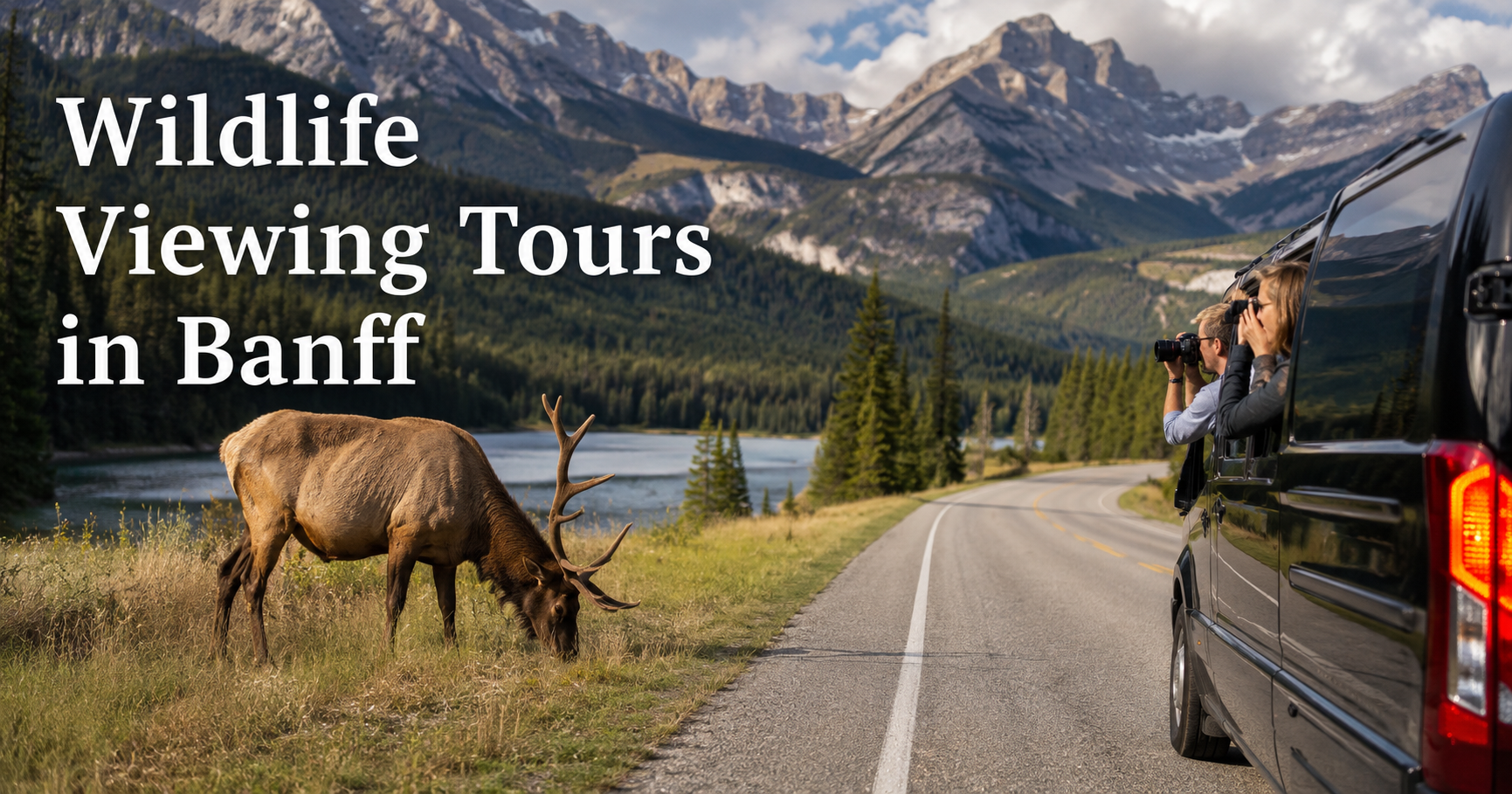
What you can see, when to go, and how to make the most of every sighting
Picture a meadow in Banff National Park at first light. Mist is lifting off the Bow Valley, and a bull elk is grazing twenty metres from where you're standing. It happens more often than you'd expect, and it's the reason people fly in from the USA, the UK, Australia and everywhere else to see this place.
Banff is one of the few places left where large animals still roam freely, and the scenery is so good it can pull your eyes off the wildlife. A good guide is the difference between a lucky glance and a proper, up-close encounter.
We're VistaChase, and we've been running wildlife tours in Banff for years. This guide is for first-timers flying in from London or Sydney, repeat visitors hoping to finally tick off a grizzly, and Calgary locals who've always meant to do it properly. You'll find what you can see, when to go, where the best spots are, and why a guided tour beats driving around on your own.
Why Banff Is One of the World's Best Wildlife Destinations
Banff National Park covers 6,641 square kilometres of the Canadian Rockies in Alberta. It became Canada's first national park in 1885 and now sits inside the Canadian Rocky Mountain Parks UNESCO World Heritage Site. That protection shapes everything you see. Wolves run elk across valley floors. Grizzlies dig for ground squirrels on open slopes. Wolverines work the high alpine ridgelines that almost no one visits.
Compared with a lot of safari destinations, Banff packs a huge variety of big animals into a small, easy-to-reach area. You don't need a bush plane or a week of backpacking. Some of the best sightings happen along the Icefields Parkway, one of the most scenic drives anywhere, or in the wide valleys around Banff townsite.
The park also enforces strict visitor rules and protects wildlife corridors. Animals get used to people keeping a respectful distance without becoming tame or dependent on handouts. That's why you see natural behaviour here: feeding, hunting, sparring, raising young.
The Wildlife You Can Expect to See on a Banff Tour
It's the question we get asked most, and the honest answer is more than you'd think, if you go at the right time with the right guide. Here's how it breaks down by species.
Grizzly Bears
Grizzlies are the headline act, and they earn it. A big male can top 300 kilograms and stand close to two metres tall on his hind legs. Watching one work a hillside, flipping rocks with one paw and digging out roots, is something you'll remember for years.
They come out of their dens in late March and April, often before the snow has cleared from the valley floors. Spring is arguably the best time to see them. The vegetation is short, the bears are hungry, and they're active for long stretches of the day. Try south-facing slopes in the Bow Valley, the area around Lake Louise, and the Icefields Parkway between Saskatchewan Crossing and Jasper.
By midsummer, many bears have moved to higher ground for huckleberries and whitebark pine nuts. In September and October they drop back down and go into hyperphagia, the pre-hibernation feeding binge where they can eat up to 20,000 calories a day. That's another excellent window, and a good guide knows which berry patches and avalanche slopes to check.
Black Bears
Black bears are more common than grizzlies here, so they're easier to find. Don't rely on colour to tell them apart, because black bears range from jet black to cinnamon brown. Look at the shape instead. Black bears have no shoulder hump, a straight facial profile, and taller, more pointed ears.
They eat almost anything: dandelions and clover in spring, berries and insects in summer, carrion when they find it. In May and June they turn up along roadsides, drawn by fresh green growth on the verges. The Bow Valley Parkway (Highway 1A) between Banff and Lake Louise is one of the most reliable roads in the park for bear sightings, and it's a regular on our tours.
Wolves
Wolves are the sighting everyone hopes for and few expect. Several packs live in the park, but they're much harder to see than bears or elk. Dawn and dusk are your best bets, and winter mornings, when packs are actively hunting, may be the single best opportunity of all.
Bow Valley packs have a history of being visible, and travellers have watched them hunt elk on the open flats near Banff townsite. If wolves top your list, plan your trip for winter or early spring and tell your guide up front.
Elk
Elk are among the easiest large animals to find, and they're never dull. A big bull in full rut, with a massive rack and a bugle that bounces off the mountains, is one of the great shows in North American wildlife. The rut runs from mid-September through October, which makes it one of our busiest times for wildlife tours.
Outside the rut, elk stay in the valleys all year. Herds of cows and calves graze the meadows around Banff townsite, along the Vermilion Lakes, and across the Bow Valley flats. Calves arrive in late May and early June, which makes that stretch a great pick for families.
One warning any decent guide will repeat: elk are big and strong. Cows with calves can be aggressive, and rutting bulls have charged vehicles and people who got too close. Keeping proper distance is the sort of thing solo visitors sometimes skip, and it's why we don't.
Bighorn Sheep and Mountain Goats
Both species are photogenic and around for much of the year. Bighorn rams are famous for their heavy, curling horns. You'll often see them on rocky slopes and at mineral licks near the highway, and around Lake Minnewanka and along the Icefields Parkway.
Mountain goats live on steeper ground, with shaggy white coats and short black horns. You'll usually find them on high cliff faces, and you'll want optics to appreciate them properly. Every VistaChase tour carries spotting scopes and binoculars for exactly that.
Moose
A bull moose in his prime stands nearly two metres at the shoulder and carries antlers well over a metre wide. He looks like he wandered out of the Pleistocene, and he's right here in Banff if you know where to look.
Moose like willow thickets, marshes and the edges of lakes and streams. The wetlands around the Vermilion Lakes, just west of Banff townsite, are among the best spots in the park, along with the marshy areas near Waterfowl Lakes on the Icefields Parkway. Go early. You'll beat the crowds and the light will be better for photos.
Coyotes, Foxes and Smaller Animals
Coyotes are everywhere in Banff, and they're often the first wild canid visitors spot. They trot across meadows, patrol frozen lake edges in winter, and hunt voles under the snow by leaping and pouncing straight down. It never gets old to watch.
Red foxes are less common but turn up along forest edges and in open valleys. Lynx are rare, though sightings do happen, and lucky visitors on longer trips occasionally spot a wolverine in the high country. Ground squirrels, pikas and hoary marmots fill in the rest of the cast.
Birds
Banff isn't marketed as a birding destination, but the birds here are excellent. Bald and golden eagles cruise the valleys, ospreys dive for fish in the Bow River, and great horned owls call from the spruce forests after dark. Harlequin ducks, some of the most striking waterfowl in North America, breed on fast mountain streams inside the park.
Clark's nutcrackers, grey jays (whiskey jacks) and Steller's jays add colour to any outing. Above the treeline, white-tailed ptarmigan swap brown summer plumage for pure white in winter. Serious birders should aim for spring or autumn migration.
When Is the Best Time to See Wildlife in Banff?
There's no bad season, only different highlights. The right time for you depends on which animals matter most and what kind of trip you're after. Whatever you pick, pack for it: our season-by-season Banff packing guide covers what to bring.
Spring (April to June)
Spring is the most dynamic season for wildlife. Bears come out of hibernation thin and hungry and spend long hours feeding in the open. Elk calves arrive, wolves are raising pups, and the landscape changes week by week as the snow retreats.
The light is great for photos, with long golden hours and dramatic skies, and the crowds are much thinner than summer. It can still be cold in April and May, so bring layers. If wildlife is your main reason for coming, rather than mountain sightseeing, spring deserves a serious look.
Summer (July and August)
Summer is peak season. The weather's warm, everything is open, and you can pair big scenery with accessible wildlife. Bears are visible at higher elevations, elk are in the valleys, and birdlife is at its peak.
The trade-off is crowds. The Trans-Canada Highway and the popular viewpoints get busy, especially in July and August. That's where a guide earns their keep. They know the quieter routes, the lesser-visited valleys and the timing windows most people miss, and they regularly find animals that self-drivers roll straight past.
Autumn (September and October)
Plenty of wildlife guides will tell you autumn is their favourite season. Bugling bulls fill the valleys with sound, bears are feeding hard and easy to see, larches turn gold in the high country, and the air is crisp. Crowds thin out after Labour Day.
The photography is hard to beat. Frost coats the meadows in the morning, elk breath steams in the cold, and a bear against golden aspens makes the kind of image people associate with the Rockies. Our autumn tours consistently produce some of our best guest feedback.
Winter (November to March)
Winter is underrated, especially if you've never seen the Rockies under snow. Bears are hibernating, but fresh snow makes tracks easy to read and animals easier to spot against the white.
Wolves are more active and visible, elk drop to lower valleys where they're easy to watch, and bighorn sheep gather where wind has cleared the grass. Frozen lakes and riverbanks draw birds, and there are far fewer people around.
The Best Wildlife Viewing Spots in Banff
Knowing where to look is one of the biggest advantages of going with a guide. These are among the most productive areas, and our guides know them well.
The Vermilion Lakes
Just minutes from Banff townsite, the Vermilion Lakes are probably the most accessible high-quality wildlife habitat in the park. The shallow wetlands and willow thickets hold moose, elk, coyotes, beavers, muskrats, ospreys, great blue herons and a lot of waterfowl. At dawn, with Mount Rundle reflected in still water, it's also one of the best photo spots in Canada. We start a lot of our morning tours here.
Bow Valley Parkway (Highway 1A)
The Bow Valley Parkway is a quieter alternative to the Trans-Canada between Banff and Lake Louise, and one of the best wildlife drives in the country. Bears, wolves, elk, deer and coyotes all turn up along its 48 kilometres. Parks Canada closes certain sections seasonally to protect denning bears and wolf pups, and our guides plan around those restrictions.
Icefields Parkway (Highway 93)
The 230-kilometre Icefields Parkway from Lake Louise to Jasper is often called one of the most scenic drives in the world, and the wildlife lives up to the views. Grizzlies show up on the open avalanche slopes between Bow Summit and Saskatchewan Crossing. Mountain goats appear on the cliffs above the road, and bighorn sheep gather near Tangle Falls. Wolves have been seen hunting elk on the flats near the Saskatchewan River Crossing.
Doing it properly takes a full day at least. If you'd like to stretch it into a longer Rockies trip, our multi-day tour packages cover Banff, Yoho and Jasper, with airport transfers if you need them.
Lake Minnewanka and the Cascade Valley
Lake Minnewanka is the largest lake in the park, and the valley around it is good wolf and elk country. The road along the north shore opens onto wide terrain where big animals are often visible, with lake and mountain scenery behind them. Bighorn sheep are regularly on the rocky slopes above the road near the entrance.
Two Jack Lake and Johnson Lake
These smaller lakes on the eastern side of the park see far fewer visitors than the big-name lakes. Bears turn up in the forests around both in spring and early summer, and the quiet makes the encounters feel more personal. They're the kind of places local guides know and guidebooks skip.
What to Expect on a Banff Wildlife Tour
Which Animals Will You See?
On a typical VistaChase wildlife tour you might see four to eight mammal species depending on the season, plus a range of birds. Spring mornings often bring bears, elk, coyotes, bighorn sheep and waterfowl in a single outing. Autumn tours usually include elk rut activity and bear feeding, with a chance at a wolf or fox. No two tours are the same, which is half the fun.
A Quick Seasonal Calendar
- January to March: wolves, elk, bighorn sheep, coyotes, winter birds
- April to May: emerging grizzlies and black bears, elk calves, wolf pups, spring migrants
- June to August: all species active, bears at higher elevations, birdlife at its peak
- September to October: elk rut, bears in hyperphagia, golden larches, wolf activity
- November to December: first snows, bears heading into dens, good wolf and elk viewing
Logistics
Our tours run in comfortable vehicles with spotting scopes and binoculars on board. Departures are early in the morning, when animals are most active. Our shared tours are capped at 12 guests per vehicle, and if wildlife is the main point of your trip, a private tour lets you build the day around the animals you most want to see.
We follow Parks Canada rules on every trip. That means staying at least 30 metres from most large mammals and 100 metres from bears and wolves, never feeding animals, and respecting seasonal road closures. The rules exist for good reasons, and we enforce them because the animals you came to see deserve it.
Getting to Banff
Banff is about 90 minutes by road from Calgary International Airport, so it works even for short international trips. Many visitors from the US, UK and Australia fold it into a bigger Canada itinerary with Jasper, Yoho or the Columbia Icefield, and we're happy to help plan one. We pick guests up from Banff and Canmore, and arrange a nearby pickup point if your property has restricted access.
Frequently Asked Questions About Banff Wildlife Tours
What animals can you see in Banff National Park?
The large mammals include grizzly bears, black bears, wolves, cougars, elk, moose, mule deer, white-tailed deer, bighorn sheep and mountain goats. Smaller residents include coyotes, red foxes, lynx, wolverines, river otters, beavers, mink, ground squirrels and marmots. The park also supports more than 280 bird species.
What is the best time to see wildlife in Banff?
Late April to early June and mid-September through October are the strongest windows for the widest range of species. Summer is good but busier, and winter is excellent for wolves and elk. Every season has a highlight, so choose based on the animals you most want to see.
Are Banff wildlife tours worth it?
Yes, and it's a practical answer rather than a sales line. A guide brings years of spotting experience, current knowledge of where animals are and how they're behaving, proper optics, and the safety habits that protect both you and the wildlife. Guests who've driven Banff on their own and then joined a tour often tell us they saw animals they'd driven straight past before.
Can you see bears on a Banff tour?
Bear sightings are common on guided tours from April through October. Both grizzlies and black bears live in the park, and a guide who tracks recent activity and knows the seasonal feeding areas will improve your odds a lot. No one can guarantee a sighting of wild animals, but bears are one of our most reliable highlights during the active season.
Where are the best wildlife viewing spots in Banff?
The Vermilion Lakes, the Bow Valley Parkway, the avalanche slopes and valley floors along the Icefields Parkway, and the Lake Minnewanka area are consistently the most productive. Within each area the best micro-habitats shift with the seasons, which is another reason a local guide helps.
Why Book Your Banff Wildlife Tour with VistaChase?
Plenty of operators will take your booking. What sets us apart is that our guides are naturalists, not generalist drivers who've memorised a few species fact sheets. They spend their days off in the backcountry and follow individual animals across seasons, and they enjoy helping guests connect with what they're seeing.
Our guests come from the USA, UK, Australia, Canada and beyond, and they want the same thing: not a zoo or a theme park, but a real encounter with wild animals living wild lives in one of the world's great landscapes.
Whether you're after your first grizzly, hoping to watch wolves hunt at dawn, planning to photograph the elk rut in golden light, or just want to understand the ecosystem around you, we have a tour for it.
Ready to Book Your Banff Wildlife Tour?
Visit vistachase.com to browse tours, check availability and reserve your spot.
We look forward to showing you Banff at its wildest.