.png)

Banff Sightseeing Tours for First-Time Visitors: The Ultimate Winter Guide (5 Days)
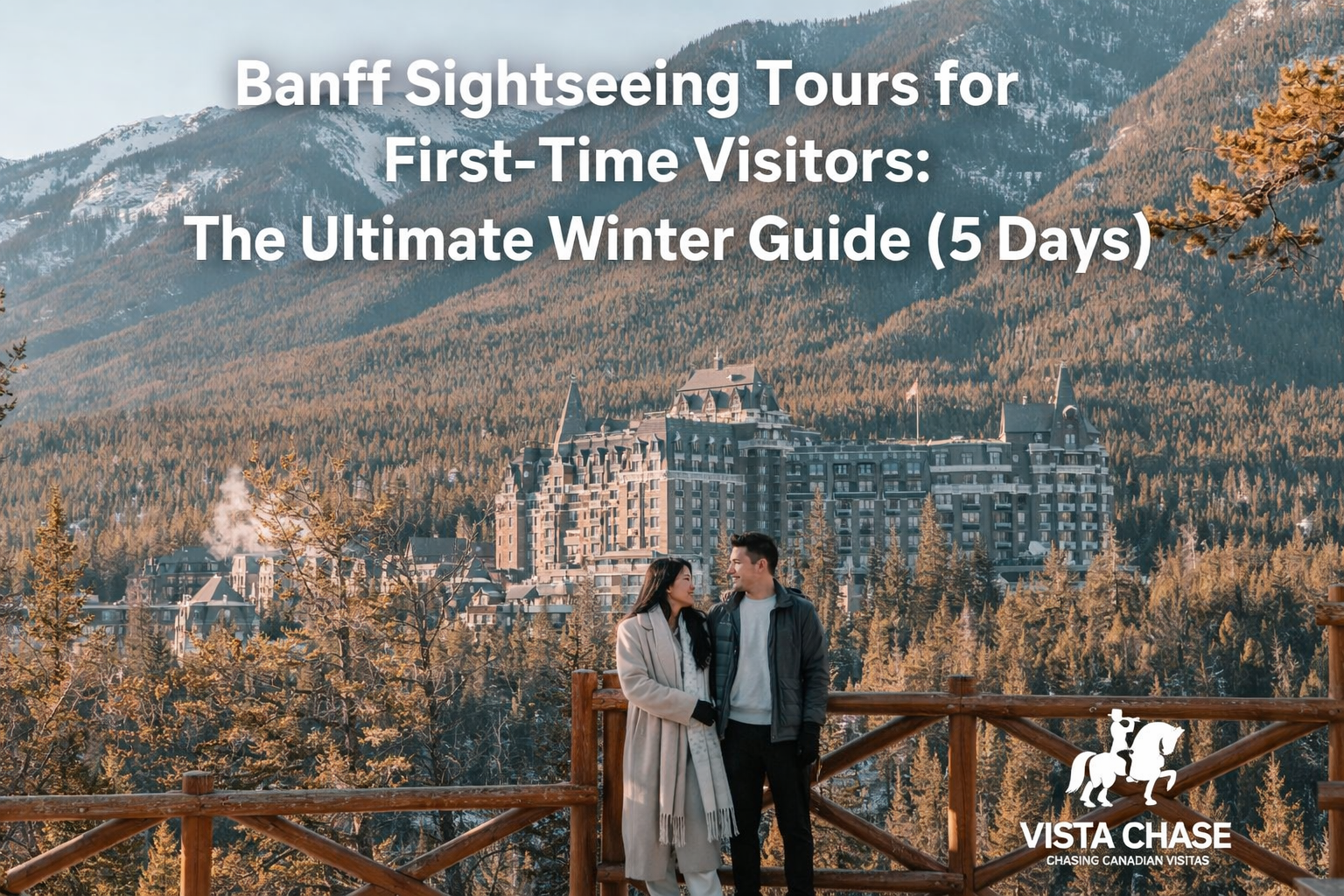
Banff sightseeing tours for first-time visitors offer the fastest, most stress-free way to experience one of the world's most spectacular national parks — especially in winter. If you have just landed in Calgary and are wondering how to make the most of 5 days in Banff National Park without the headache of icy roads, closed parking lots, and missed viewpoints, this guide is for you.
Winter in Banff is genuinely magical. Frozen turquoise lakes, snow-draped peaks, glowing elk in the valley, and the crunch of your boots on fresh powder as waterfalls turn to chandelier-like ice columns. But first-timers often discover, sometimes too late, that winter Banff requires more planning than a summer visit. Roads close. Parking fills before sunrise. Temperatures drop to -20°C. Some attractions shut down entirely.
That is exactly why booking guided Banff tours — whether private or shared — is the single smartest decision a first-time winter visitor can make. Local guides handle every logistical headache so you can focus on taking in the views.
Why Winter Is the Best Time for First-Time Banff Visitors
Many first-timers assume summer is the right season. But seasoned travellers know winter holds its own powerful appeal — and in several ways, it is actually better for new visitors:
- Fewer crowds at iconic spots like Lake Louise and the Banff Gondola
- Lower accommodation rates compared to peak summer months
- Unique winter activities: ice walks, snowshoeing, dog sledding, and skiing
- Dramatic frozen landscapes that simply do not exist in any other season
- Wildlife sightings are easier — animals congregate in valleys near roads
Winter in Banff National Park typically runs from late October through late April. Temperatures average between -5°C and -15°C, dropping lower in January and February. December and March are sweet spots for first-timers: plenty of snow, reasonable temperatures, and manageable crowds.
Planning a trip to Banff with your family? Read our complete guide to family-friendly Banff tours and discover the best activities, itineraries, and tips for travelling with kids."
Before You Go: Essential First-Timer Checklist
Before diving into the 5-day itinerary, here is everything a first-time visitor needs to know and prepare:
Parks Canada Pass
Entering Banff National Park requires a valid Parks Canada pass. Daily passes cost approximately $10.50 CAD per adult or $21.00 CAD per family/group. The annual Discovery Pass ($72.25 per adult or $145.25 per family) grants access to over 80 national parks across Canada — a great investment if you plan to explore more of the Rockies.
Getting to Banff from Calgary
Banff is located 90 minutes west of Calgary International Airport (YYC) along the Trans-Canada Highway. Your options:
Private transfer with Vista Chase: The most comfortable option. Door-to-door from YYC to your Banff hotel in a warm, comfortable SUV with a local guide. No navigating icy highways on your first day.
Rental car: Flexible but challenging in winter. Roads can be icy and mountain driving experience is strongly recommended.
Brewster Express shuttle: Budget-friendly and reliable, but fixed departure times and no personalization.
What to Pack for Winter Banff
Packing correctly is essential for enjoying a winter Banff trip as a first-timer:
- Thermal base layers (merino wool is ideal)
- Mid-layer fleece or down jacket
- Waterproof outer shell jacket and pants
- Insulated, waterproof winter boots rated to at least -30°C
- Wool or fleece hat, neck gaiter, and insulated gloves
- Hand warmers and toe warmers for outdoor activities
- Microspikes or ice cleats for icy trails and walkways
- Sunglasses or ski goggles (snow glare is intense on sunny days)
Guided Banff tour operators like Vista Chase use winter-equipped SUVs with heated interiors, so you will always have a warm base between outdoor adventures.
The Perfect 5-Day Banff Winter Itinerary for First-Time Visitors
This itinerary is designed specifically for first-timers using Banff sightseeing tours as the primary mode of exploration. It balances iconic must-see sights, winter-exclusive experiences, and enough downtime to actually enjoy the mountain town atmosphere.
Day 1: Arrive in Banff — Settle In and Explore Banff Avenue
Your first day is all about arrival, orientation, and getting a feel for the magic of Banff town in winter.
Morning: Fly into Calgary International Airport. If you have pre-booked a Vista Chase transfer, your driver will be waiting to take you directly to your hotel in Banff — roughly a 90-minute scenic drive through the Bow Valley.
Afternoon: Check in and head straight to Banff Avenue. This is Banff's beating heart — a picturesque main street framed by mountain peaks on both ends. Browse local shops, pick up any last-minute winter gear, and simply soak in the small-town charm that makes Banff unlike any other national park town in the world.
Late Afternoon: Walk down to Bow Falls. In winter, the falls are often partially frozen — a spectacular half-ice, half-rushing-water display unlike anything you will see elsewhere. The short, easy walk from town makes this perfect for arrival day.
Evening: Warm up at one of Banff's cosy restaurants on Banff Avenue. Try a local craft beer or hot chocolate and get to bed early. Big days are ahead.
Are you still confused about what you will get in lluxury banff tours
Day 2: Banff Gondola, Upper Hot Springs, and Vermilion Lakes
Day 2 is your introduction to the landscape from above and below — first from the top of Sulphur Mountain, then soaking in mineral-rich hot springs with mountain views.
Morning — Banff Gondola: The Banff Gondola is the region's most iconic winter experience for first-timers. In just 8 minutes, an enclosed gondola carries you 2,292 feet up Sulphur Mountain to a ridgeline boardwalk with panoramic views of six mountain ranges, the Bow Valley, and the town below. On clear winter mornings, the 360-degree view of snow-plastered peaks is one of the most breathtaking sights in all of Canada. Allow 2 to 3 hours. The Sky Bistro at the summit is a great spot for hot drinks and light bites.
Afternoon — Banff Upper Hot Springs: A 5-minute drive from the Gondola base, the Banff Upper Hot Springs are a non-negotiable for winter visitors. Steaming mineral pools at 37-40°C with views of Mount Rundle and the Bow Valley are magical enough in summer — in winter, with snow falling and steam rising around you, it becomes something truly unforgettable. Entry costs under $10 CAD per adult.
Late Afternoon — Vermilion Lakes: A short drive from town, the Vermilion Lakes are Banff's most photogenic sunset spot. In winter, the frozen lakes reflect the alpenglow on Mount Rundle in shades of pink and orange. This is also a top spot for wildlife — elk, coyotes, and occasionally wolves are regularly spotted here at dusk. Vista Chase guides know exactly when and where to position guests for the best light.
If you are looking for Athabasca Glacier Tour Options: check out now
Day 3: Johnston Canyon Ice Walk — Banff's Most Iconic Winter Experience
Day 3 is arguably the highlight of any first-time winter Banff trip. Johnston Canyon is the most popular guided winter excursion in Banff National Park for good reason.
Morning — Johnston Canyon Ice Walk: Located 26 km west of Banff town, Johnston Canyon is a narrow limestone gorge where the rushing creek freezes in winter to create enormous curtains and columns of turquoise ice. The guided ice walk covers approximately 5.8 km return to the Upper Falls, with catwalk bridges bolted directly into the canyon walls. The frozen Upper Falls — a 30-metre wall of solid turquoise ice — is nothing short of breathtaking.
Vista Chase offers guided Johnston Canyon sightseeing tours with hotel pickup, making this the easiest and safest way to experience the canyon for first-timers. The trail requires microspikes — these are usually provided or can be rented at the trailhead.
Afternoon — Castle Mountain and the Bow Valley Parkway: The drive back from Johnston Canyon along the Bow Valley Parkway is one of the most scenic roads in Canada in winter. Ask your Vista Chase guide to stop at Castle Mountain viewpoint — the enormous fortress-like peak is one of the Rockies' most dramatic rock formations, and in winter it rises above a silent snow-covered valley in absolute stillness.
Evening: Return to Banff town. The evening is yours to explore Banff's food scene — from upscale Canadian cuisine to local craft breweries..
Day 4: Lake Louise in Winter — A Frozen Fairytale
Lake Louise in summer draws millions. In winter, it becomes an entirely different world — quieter, more intimate, and in many ways even more stunning.
Morning — Lake Louise: Lake Louise is located 57 km northwest of Banff town. In winter, the iconic turquoise water freezes completely, transforming into a vast skating rink flanked by the Fairmont Chateau Lake Louise and the Victoria Glacier towering above. First-timers are often reduced to silence the first time they walk out onto the frozen lake. The Chateau offers skate rentals, hot drinks, and a warm indoor respite.
For first-time visitors, booking a guided tour to Lake Louise is far preferable to driving independently. Winter road conditions between Banff and Lake Louise can be challenging, and parking areas at the lake fill well before dawn even in winter.
Late Morning — Lake Louise Ski Resort: Even non-skiers should visit the Lake Louise Ski Resort in winter. It is one of the largest ski areas in North America, and the views from the base area alone are magnificent. If you are a skier or snowboarder, a half-day on these slopes is a bucket-list experience. The terrain ranges from gentle groomers for beginners to expert-level chutes.
Afternoon — Fairmont Chateau Tea: The Fairmont Chateau Lake Louise offers afternoon tea in winter — an indulgent, uniquely Canadian mountain experience. Book in advance as it fills quickly.
Return to Banff: Your Vista Chase guide will bring you back via the most scenic route. Depending on the time, a brief stop at Bow Lake viewpoint (if road conditions allow) offers a glimpse of the Icefields Parkway's grandeur.
Day 5: Lake Minnewanka, Norquay Lookout, and Farewell
Your final day in Banff is about experiencing the wider national park landscape around Banff town before heading home.
Morning — Lake Minnewanka: Lake Minnewanka is Banff's largest lake and one of its most dramatic. In winter, the frozen surface stretches 24 km into a narrow mountain valley, with peaks rising sharply on both sides. The lake road is open year-round for walking and cycling, and the silence of the frozen landscape on a winter morning is deeply moving. Wildlife sightings — bighorn sheep, elk, and even mountain lions — are common around the Minnewanka loop.
Mid Morning — Mount Norquay Lookout: The Norquay Lookout offers arguably the finest view of Banff town and the Bow Valley from any accessible road viewpoint. Sweep your eyes across a scene of snow-covered spruce trees, the winding Bow River, and Cascade Mountain dominating the north. Vista Chase guides know the exact parking spot for the perfect photograph.
Afternoon — Final Banff Avenue Wander: Spend your last hours souvenir shopping, grabbing a final coffee on Bear Street, or joining a snowshoeing adventure in the woods just minutes from downtown.
Departure Transfer: Vista Chase provides comfortable return transfers from Banff to Calgary International Airport — arriving refreshed and relaxed rather than stressed from navigating winter highway driving.
Guided Banff Tours vs Self-Drive: What First-Time Visitors Need to Know
One of the most common questions from first-time Banff visitors is whether to rent a car or book guided Banff sightseeing tours. Here is an honest breakdown:
Why Guided Banff Sightseeing Tours Win for First-Timers
- Winter roads in Banff National Park can be treacherous — black ice, sudden snowfall, and mountain passes require experience
- Parking at popular sites like Lake Louise and Johnston Canyon fills extremely fast, even in winter
- Local guides provide real-time knowledge: wildlife locations, best lighting times, hidden viewpoints, and historical context that no GPS can offer
- Private Banff sightseeing tours allow hotel pickup and fully customized itineraries around your interests and pace
- No rental car fees, fuel costs, or navigational stress
When a Rental Car Makes Sense
- If you are extending your trip to self-drive the Icefields Parkway between Banff and Jasper
- If you are an experienced winter driver comfortable on mountain highways
- If you want maximum flexibility to stop anywhere at any hour
For pure first-time Banff winter sightseeing, Vista Chase private and shared tours are the most value-packed, stress-free option on the market. With hotel pickup, winter-safe SUVs, and 5-star-rated local guides, Vista Chase has earned over 600 five-star reviews on Google and Tripadvisor.
Banff Sightseeing Tour Options from Vista Chase
Vista Chase offers several tour formats designed for different types of first-time visitors to Banff National Park:
Private Banff Sightseeing Tours
Perfect for couples, families, and small groups wanting maximum flexibility. Your own dedicated guide and SUV, hotel pickup, and a fully customizable itinerary. Spend longer at Johnston Canyon if you are a photography lover, or skip straight to Lake Louise for a longer skating session. No compromises.
Book here: Vista Chase Private Tours
Shared Banff Sightseeing Tours
The best value option for solo travellers and couples comfortable sharing a small-group experience. Vista Chase shared tours cover all the major highlights in one expertly guided day — Lake Louise, Johnston Canyon, Bow Valley Parkway — with a friendly group of fellow travellers from around the world.
Book here: Vista Chase Shared Tours
Multi-Day Banff Tour Packages
For visitors wanting to cover Banff, Jasper, and Yoho National Parks in one seamless guided trip. Multi-day packages include airport transfers, daily guided tours, and hotel transfers — eliminating every logistical headache from start to finish.
Book here: Vista Chase Multi-Day Packages
Lake Louise and Moraine Lake Shuttles
For visitors who want guaranteed access to Lake Louise and the surrounding area without booking a full-day tour. Vista Chase sunrise and golden hour shuttles operate year-round from Banff, Canmore, and Lake Louise Village.
Book here: Vista Chase Shuttles
Insider Tips for First-Time Banff Winter Visitors
After years of guiding first-time visitors through Banff National Park in winter, here are the insider tips that separate a good trip from an unforgettable one:
- Book tours and shuttles early — winter slots fill faster than most visitors expect, especially December and February
- Wake up early — winter days in Banff are short (sunrise around 8:30am, sunset around 5:30pm). Make every daylight hour count
- Layer up even if it seems warm at the trailhead — temperatures drop fast in canyon shadows and at elevation
- Always carry a snack and water — warm drinks in a thermos are essential for morning excursions
- Check Parks Canada's weather and trail condition updates the evening before each activity
- Download offline maps — cell coverage can be patchy in the backcountry and along the Bow Valley Parkway
- If you spot wildlife, stay at least 30 metres from elk and 100 metres from bears (rare in winter but possible in shoulder seasons)
- For photography lovers: the golden hour light in Banff winter is extraordinary — plan to be at Vermilion Lakes or Lake Louise around sunset
Frequently Asked Questions: Banff Sightseeing Tours for First-Time Visitors
What is the best sightseeing tour in Banff for first-time visitors?
The best Banff sightseeing tour for first-timers combines Johnston Canyon, Lake Louise, Bow Valley Parkway, and Banff townsite into a single guided day. Vista Chase private and shared tours cover all of these highlights with expert local commentary and hotel pickup. For maximum flexibility, a private tour lets you customize the itinerary entirely around your interests.
Is it better to take a guided tour or self-drive in Banff?
For first-time winter visitors, guided tours are almost always the better choice. Winter mountain driving requires experience, parking at major sites fills extremely fast, and a knowledgeable local guide adds layers of context and hidden discoveries that no map or app can replicate. Self-driving makes more sense for experienced winter drivers on extended road trips who want to cover areas like the full Icefields Parkway.
How many days do first-time visitors need in Banff?
Five days is the ideal amount of time for a first-time Banff winter visit. This allows one day each for Banff town orientation, the Banff Gondola and Hot Springs, Johnston Canyon, Lake Louise, and a final Minnewanka loop before departure. Three-day trips are possible but you will leave wanting more. Seven days opens up day trips to Yoho National Park and the southern Icefields Parkway.
What are the must-see places in Banff National Park in winter?
The essential winter must-sees for first-time Banff visitors are: Johnston Canyon ice walk, Lake Louise frozen lake and Chateau, Banff Gondola summit, Banff Upper Hot Springs, Vermilion Lakes at sunset, Lake Minnewanka, and Norquay Lookout. Vista Chase guided tours cover all of these efficiently across a 5-day stay.
Are Banff sightseeing tours suitable for all ages?
Yes. Vista Chase tours are designed to be accessible for all ages and fitness levels. Private tours are especially well-suited to families with young children, older travellers, and anyone with limited mobility — your guide adjusts the pace and activity intensity to suit your group. The Johnston Canyon lower falls walk is easy enough for most ages. The full upper falls walk requires reasonable fitness and proper winter footwear.
Do Banff tours include Lake Louise and Johnston Canyon?
Vista Chase's full-day Banff sightseeing tours can include both Lake Louise and Johnston Canyon depending on the tour type selected. The private tour option allows you to prioritize both in a single day. Shared tours follow set routes that cover the major highlights. Multi-day packages naturally cover all major sites across several days. Check vistachase.com for current seasonal tour routes and availability.
When is the best time to visit Banff for sightseeing?
For winter sightseeing, December through March offers the best combination of snow, frozen lakes, ice walks, and manageable crowds. February is ideal for skiing. December is magical for the Christmas atmosphere in Banff town. For first-time visitors wanting to experience both summer lakes and winter adventures, two separate trips — one in July and one in February — is the ultimate answer.
Final Thoughts: Make Your First Banff Winter Trip Unforgettable
Banff National Park in winter is one of the most extraordinary travel experiences on earth. Frozen turquoise canyons, snow-wrapped mountain peaks, glowing elk in the blue dusk light, and the warmth of Banff's alpine town waiting at the end of every adventure. But experiencing it as a first-timer requires smart planning — and the smartest single decision you can make is booking guided Banff sightseeing tours with a trusted local operator.
Vista Chase combines expert local knowledge, premium vehicles, flexible private and shared tour options, and genuine care for every guest's experience. With over 600 five-star reviews across Google, Tripadvisor, and Viator, Vista Chase is the most trusted Banff tour operator for first-time visitors.
Your first Banff winter trip will stay with you for a lifetime. Make every moment count.
Book Your Banff Sightseeing Tour with Vista Chase →
Use code BANFF10 to save 10% on your booking
Related Resources from Vista Chase
Johnston Canyon Hike Guide — Vista Chase Blog
Frozen Bubbles at Abraham Lake
Book a Multi-Day Banff Package