.png)

Banff Winter Itinerary for First-Time Visitors: Your Complete 3-Day Trip Planner
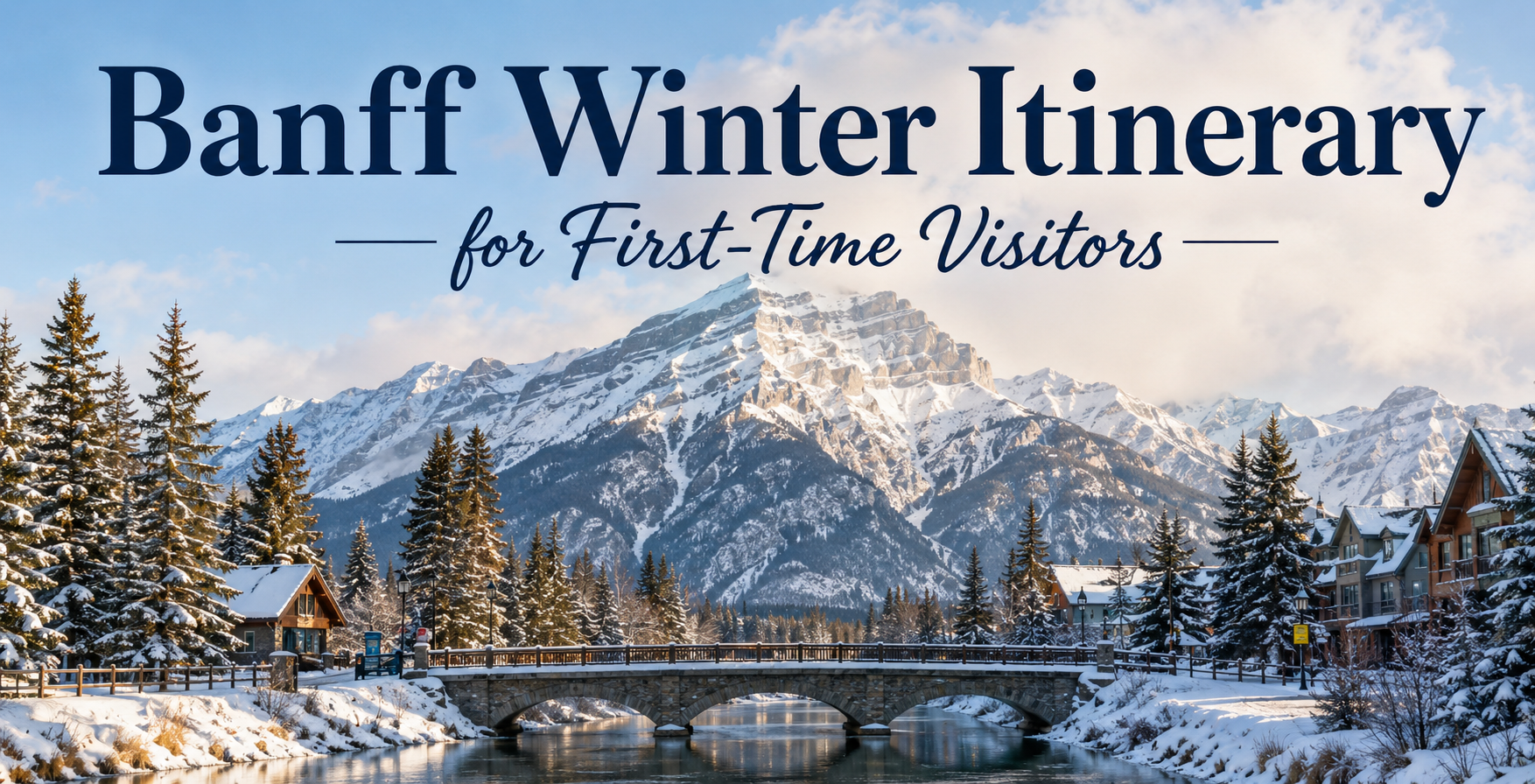
So you've decided to visit Banff in winter - brilliant choice. Banff National Park in the colder months is something else entirely: frozen turquoise lakes, snow-laden pines, elk drifting silently through the valley, and a mountain town that somehow feels even more magical under a blanket of white.
But if it's your first time here, winter Banff can also feel a little daunting. When should you go? How do you get around on icy roads? What do you actually pack? And how many days is enough to see the highlights without rushing?
This Banff winter itinerary is built specifically for first-timers - whether you're flying in from the US, the UK, or Australia. It covers a focused 3-day Banff winter itinerary with day-by-day plans, plus honest advice on driving conditions, winter clothing, where to stay, and how to balance outdoor adventure with indoor warmth. Think of it as your personal first-time Banff winter travel guide - no guesswork, no fluff.
And if you're wondering about guided tours and sightseeing once you arrive, check out our full guide on Banff sightseeing tours for first-time visitors for everything from gondola rides to ice walks.
How Many Days Do You Actually Need in Banff in Winter?
This is one of the most common questions for first-timers planning a Banff winter trip. The honest answer: three days is the sweet spot for a first visit.
Three days gives you enough time to hit all the headline experiences - frozen lakes, iconic drives, hot springs, and a proper feel for Banff town - without burning out. It's also the minimum that lets you actually slow down and soak it all in, rather than rushing from one viewpoint to the next.
Four to five days is ideal if you want to add skiing, a guided ice walk through Johnston Canyon, or a day trip along the Icefields Parkway. But for the purposes of this planner, we're working with three solid, well-paced days.
When Is the Best Time to Visit Banff in Winter?
Winter in Banff officially spans late October through late April, but the sweet spots for first-timers are:
- December: The town is beautifully lit, snow is settled, and the Christmas atmosphere is genuinely special. Slightly busier over the holidays.
- January & February: Peak winter conditions. Coldest temps but the most reliable snow, excellent skiing, and the famous ice magic festival at Lake Louise.
- March: Our favourite for first-timers. Days are getting longer, temperatures are slightly warmer, the snow is still perfect, and crowds are thinner than December. Spring light on the mountains is extraordinary.
Avoid April unless you're comfortable with shoulder-season unpredictability - trails can be slushy and some winter experiences wind down.
Driving in Banff in Winter: What First-Timers Need to Know
This is the section most travel blogs skip - but it's one of the most important for planning a safe, stress-free trip.
Roads and Conditions
The Trans-Canada Highway (Highway 1) between Calgary and Banff is well-maintained year-round, but icy patches and snowfall are common. The Bow Valley Parkway (Highway 1A), which runs parallel to the Trans-Canada, is more scenic and quieter - but also less frequently plowed. It's worth driving in good conditions but check the Alberta 511 road report before setting out.
What You'll Need
- Winter tires or all-season tires rated for winter use - this is a legal requirement in certain mountain areas
- An ice scraper and snow brush in the car
- A full tank of fuel before leaving Banff town for any outlying areas
- Sunglasses for daytime driving - snow glare on sunny days is intense
Pro tip: If you're not experienced with mountain winter driving - or simply don't want the stress - booking a guided tour from Vista Chase removes the driving headache entirely. Their winter-equipped SUVs with local guides handle all the logistics while you focus on the views.
What to Wear in Banff in Winter: A First-Timer's Packing List
Banff winter temperatures range from around -5°C (23°F) on mild days to -20°C (-4°F) during cold snaps, particularly in January. Layering is everything.
Base Layer
- Merino wool or synthetic thermal top and leggings - avoid cotton, which holds moisture
- Thermal socks - at least two pairs per day for outdoor excursions
Mid Layer
- Fleece jacket or down puffer - this is your warmth layer
Outer Layer
- Waterproof and windproof shell jacket and snow pants
- Insulated, waterproof winter boots rated to at least -30°C (-22°F) - this is non-negotiable
Accessories
- Wool or fleece beanie, neck gaiter or balaclava, and insulated gloves (not just liners)
- Hand warmers and toe warmers for longer outdoor excursions
- Microspikes or ice cleats - attachable to your boots for icy trails. Available to rent at most outdoor stores in Banff
- Ski goggles or wraparound sunglasses for bright days on the snow
Indoor tip: Banff's restaurants, cafes, and hotels are warm - so you'll be peeling off layers often. A backpack or day bag for carrying your gear is essential.
Where to Stay in Banff in Winter
Banff town itself is the best base for a first-time winter visit - everything is walkable, and you're perfectly positioned for day trips in every direction.
What to pack in banff season wise.
Banff Town Centre
Staying on or near Banff Avenue puts you walking distance from restaurants, the Bow River, and the Banff townsite trailheads. Options range from mid-range hotels like the Banff Caribou Lodge to higher-end stays like the Elk + Avenue Hotel.
Lake Louise Village
If your priority is skiing or being right on the doorstep of Lake Louise, staying in Lake Louise Village (57 km from Banff town) is worth considering. The Fairmont Chateau Lake Louise is a landmark winter experience in itself - though prices reflect that.
Canmore
Canmore, just 25 km east of Banff, offers more affordable accommodation with easy access into the national park. It's a charming mountain town in its own right and a good budget-conscious alternative.
Book early. Winter accommodation in Banff - especially over the December holidays and February ice magic season - fills months in advance.
Your 3-Day Banff Winter Itinerary
This 3-day Banff winter itinerary is designed to balance iconic outdoor highlights with enough warmth and indoor recovery to keep you energised throughout.
Day 1: Arrive, Explore Banff Town & Vermilion Lakes Sunset
Morning - Arrive and Settle In
Fly into Calgary International Airport (YYC) - the closest major airport to Banff, roughly 90 minutes east along the Trans-Canada Highway. Whether you're driving a rental car or arriving via a private transfer, the drive into the mountains is a proper introduction to the scale of the Canadian Rockies.
Check into your accommodation, grab a coffee on Banff Avenue, and let yourself acclimatise to both the altitude and the cold.
Afternoon - Banff Avenue and Bow Falls
Your first afternoon is for orientation. Banff Avenue is the main street - framed at both ends by mountain peaks - lined with outdoor gear shops, local restaurants, and independent boutiques. Pick up any last-minute gear here (microspikes, extra gloves, hand warmers).
From town, it's a short, easy walk down to Bow Falls. In winter, the falls are partially frozen - a striking combination of rushing water and hanging ice formations that signals you're somewhere genuinely special.
Late Afternoon - Vermilion Lakes
Drive or shuttle five minutes west of town to the Vermilion Lakes viewpoint. This is Banff's most photogenic sunset location - a series of shallow lakes beneath Mount Rundle, glowing pink and orange as alpenglow hits the peaks. In winter, the frozen lake surface adds a still, glassy foreground that makes for extraordinary photos.
This is also one of the best spots in the park for wildlife - elk, coyotes, and even wolves are regularly spotted here at dusk.
Evening - Dinner in Town
Banff has a genuinely impressive food scene for a small mountain town. Try Crazyweed Kitchen for creative Canadian cuisine, or keep it casual at one of the craft breweries on Bear Street. Get to bed early - Day 2 is a full one.
Day 2: Banff Gondola, Upper Hot Springs & the Bow Valley Parkway
Morning - Banff Gondola
Start Day 2 at the Banff Gondola, which whisks you 2,292 feet up Sulphur Mountain in just eight minutes. At the top, a ridgeline boardwalk gives you panoramic views across six mountain ranges, the Bow Valley, and Banff town below. On a clear winter morning, the scene is breathtaking - a 360-degree sweep of snow-covered peaks in every direction.
Allow two to three hours. The Sky Bistro at the summit is excellent for breakfast or a hot drink before the descent.
Afternoon - Banff Upper Hot Springs
Five minutes from the gondola base, the Banff Upper Hot Springs are one of winter's most memorable experiences. Steaming mineral pools at 37-40°C, views of Mount Rundle, and - if you're lucky - snowflakes falling around you. It's everything a hot spring should be, made better by the cold air. Entry is under $10 CAD per adult.
Late Afternoon - Bow Valley Parkway
The Bow Valley Parkway (Highway 1A) is one of the most scenic drives in Canada in any season. In winter, it's quiet, snow-covered, and perfect for wildlife spotting. Big-horn sheep, elk, and mule deer are commonly seen along this route. Stop at the Castle Mountain viewpoint - the enormous limestone fortress rising above the snow-covered valley floor is one of the Rockies' most iconic sights.
Evening
Back in town, pick up groceries or try one of Banff's more relaxed spots for dinner. You've earned it.
Day 3: Lake Louise, Lake Minnewanka & Final Banff Afternoon
Morning - Lake Louise
Lake Louise in winter is, for most first-time visitors, the highlight of the entire trip. The iconic turquoise lake freezes completely, transforming into a vast natural skating rink flanked by the Fairmont Chateau and the Victoria Glacier towering above. The silence of a winter morning here - broken only by the scrape of skates - is something you'll remember for a long time.
The Chateau offers skate rentals, hot drinks, and a warm interior for recovery. Even if you're not skating, walking out onto the frozen lake and standing beneath the glacier is a genuinely moving experience for first-timers.
Getting there: Lake Louise is 57 km northwest of Banff town along Highway 93N. Road conditions are generally good but can be icy in the early morning. If you prefer not to drive, Vista Chase private tours offer hotel pickup and guided access to Lake Louise with no parking or road stress.
Late Morning - Moraine Lake Road (Closed in Winter)
Note for first-timers: Moraine Lake Road is closed from November through late May due to avalanche risk. Moraine Lake is a summer experience - one to plan for a future trip.
Afternoon - Lake Minnewanka
On your way back from Lake Louise, stop at Lake Minnewanka - Banff's largest lake. In winter, the frozen surface stretches 24 km into a narrow mountain valley, with peaks rising sharply on both sides. The silence here is extraordinary. The Minnewanka loop road is open year-round for walking, and wildlife sightings - bighorn sheep, eagles, and elk - are common.
Late Afternoon - Final Wander in Banff Town
Spend your final hours souvenir shopping on Banff Avenue, grabbing a last coffee, or doing a short snowshoe through the trails just minutes from downtown. Many rental operators in town offer snowshoe hire with no guide required for the easier trails.
Looking for a guided group experience to cap your trip? Vista Chase shared tours offer a great way to cover multiple highlights in a single day with expert local commentary.
Balancing Outdoor and Indoor Experiences in Banff Winter
Winter days in Banff are short - sunrise around 8:00-8:30am, sunset around 5:00-5:30pm. That means you have roughly nine hours of daylight to work with, and the cold means you'll want built-in warm breaks.
A good rhythm for each day is: outdoor highlight in the morning, warm recovery over lunch, second outdoor activity in the afternoon, done before dark. Don't try to pack in more than two major outdoor experiences per day - the cold is more tiring than you expect, and rushing between sights means missing the actual experience of being in the mountains.
Banff's indoor options are genuinely excellent: the Whyte Museum of the Canadian Rockies, the Banff Centre for Arts and Creativity, the Upper Hot Springs, and a dozen cosy cafes and restaurants all make for perfect recovery stops between adventures.
Extending Your Trip: Multi-Day Banff Packages
If three days isn't enough - and for many first-timers it isn't - Vista Chase multi-day tour packages offer a seamless way to extend your Banff experience into Jasper, Yoho, and beyond. Everything from airport transfers to daily guided tours is handled, so you can simply show up and explore.
A five or seven-day package also opens up the Icefields Parkway between Banff and Jasper - considered one of the most spectacular drives on earth, and even more dramatic under winter snow.
Ready to Plan Your Banff Winter Trip?
Banff in winter rewards first-time visitors who come prepared, pace themselves, and let the mountains set the tempo. Three days done well will leave you planning the return trip before you've even boarded your flight home.
Start with a solid itinerary, dress for the cold, choose your accommodation early, and don't underestimate the value of a local guide who knows exactly where to be and when. Head to the Vista Chase to explore all available tours and plan your perfect Banff winter visit.