.png)

Best Photography Tours in Banff & Lake Louise: A Complete Guide for 2026
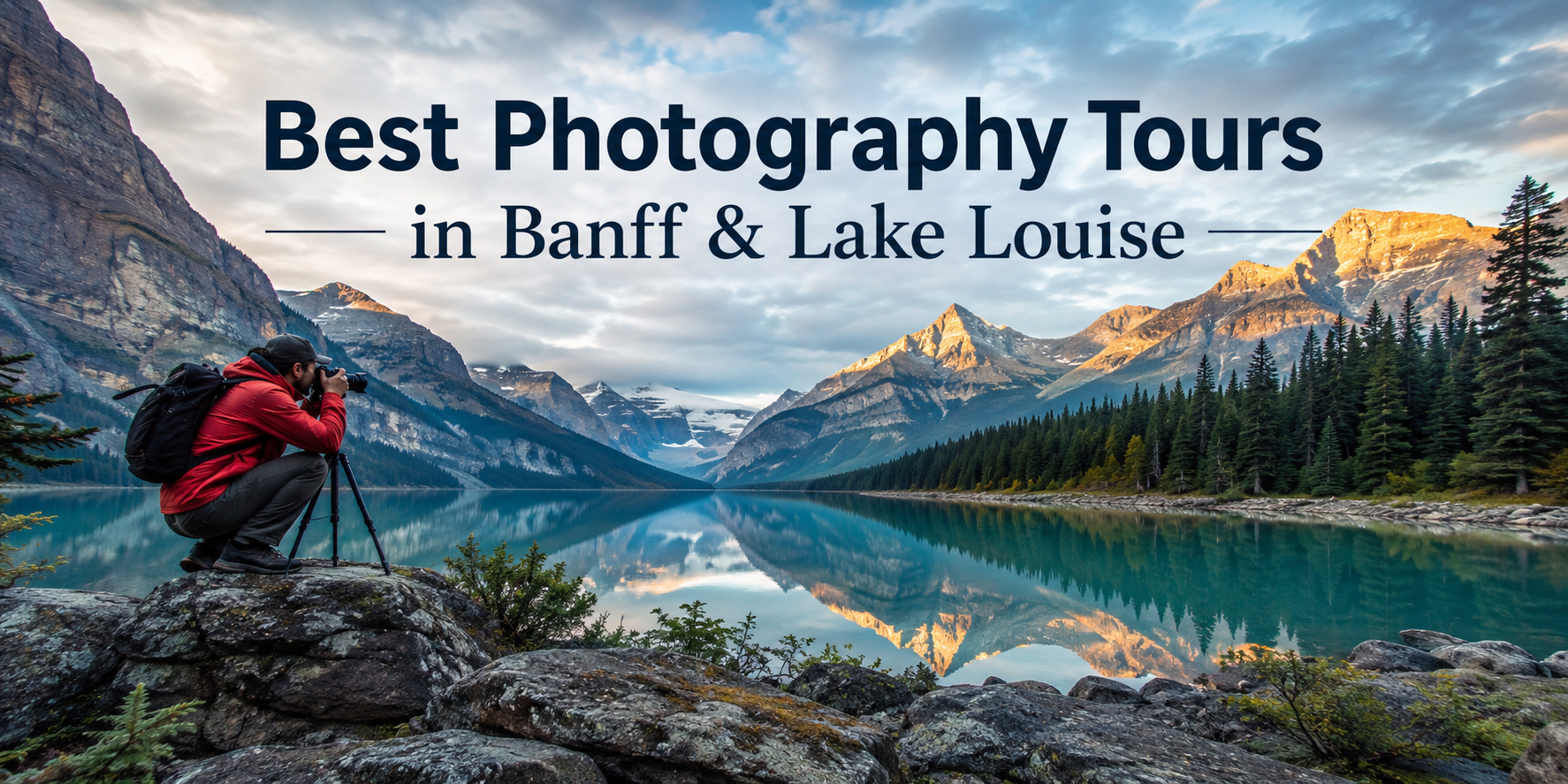
If you have been dreaming about capturing those jaw-dropping turquoise lakes, snow-capped peaks, and golden meadows you keep seeing on every travel feed, let me be straight with you: Banff and Lake Louise are every bit as stunning in person. More so, actually. No filter in the world does justice to what you see when you are standing at the edge of Moraine Lake at sunrise, mist rolling off the water, the Valley of the Ten Peaks reflected perfectly below you.
I have been working with photographers and tour groups across the Canadian Rockies for years now, and the question I get more than any other is simple. How do I actually photograph Banff properly? Not just snap a few shots from a parking lot, but genuinely capture it. The answer almost always leads back to the same thing: go with someone who knows the land.
This is exactly why we built Vista Chase. We are a Banff-based tour operator built around one idea: that the Canadian Rockies deserve to be experienced slowly, intentionally, and with someone beside you who genuinely loves this place. This guide walks you through everything you need to know about photography tours in Banff and Lake Louise, from what to expect and when to go, to what to bring and why a guided experience will give you shots that most solo travellers simply never get.
Why Banff Is a Photographer's Dream Destination
Banff National Park sits in the heart of the Canadian Rockies and covers more than 6,600 square kilometres of protected wilderness. It is one of the most photographed places on earth for a reason. The combination of glacial lakes, ancient forests, wildlife corridors, and dramatic mountain backdrops gives you almost infinite compositions no matter the season.
Lake Louise and Moraine Lake are the headliners, of course. But what most visitors do not realize until they arrive is that the surrounding area, Johnston Canyon, Vermilion Lakes, Bow Valley Parkway, Icefields Parkway, holds just as much visual power. The difference between a good photograph and an extraordinary one in Banff is usually knowing where to stand and when to be there.
That is where a photography-focused tour changes everything.
What to Expect on a Banff Photography Tour
A photography tour in Banff is not a sightseeing bus trip with a camera. It is a small-group or private experience led by a local guide who combines knowledge of the landscape with a genuine understanding of light, composition, and timing.
Most tours run in the early morning hours for a reason. Golden hour in the Canadian Rockies is spectacular, and the crowds that flood popular spots by mid-morning simply are not there at 5 am. Your guide will typically pick you up from your hotel or a central meeting point and take you to locations timed precisely around the light.
At Vista Chase, our guides pick you up right from your doorstep and take you through a thoughtfully planned route built around the best light of the day. On a typical full-day or sunrise outing around Banff and Lake Louise, you might visit two to four locations. That might sound like a small number, but each stop is deliberate. The goal is not to rush you through a checklist. It is to help you slow down, read the environment, and make images that mean something.
Throughout the tour, you will get hands-on guidance tailored to your camera and your skill level. Whether you are shooting on a mirrorless camera with multiple lenses or just getting started with your phone, a good guide meets you where you are.
The Best Photography Spots in Banff & Lake Louise
Moraine Lake
Moraine Lake is arguably the most photographed lake in Canada. Surrounded by the Valley of the Ten Peaks, it sits at an elevation of about 1,885 metres and is accessible via a narrow road that opens seasonally, typically from late May to mid-October.
The famous Rockpile viewpoint above the lake gives you that postcard shot everyone recognises. But the real magic is in the quieter angles: along the lakeshore early in the morning when the surface is glassy, or from the canoe landing looking back toward the inlet. A local guide knows which vantage points reward patience and which ones are worth moving past.
One important note: Parks Canada now requires a shuttle reservation or Parks Pass to access Moraine Lake during peak season. When you book through Vista Chase, all of that is handled for you so you are not scrambling at 4 am trying to figure out the Parks Canada reservation system.
Lake Louise
Lake Louise is the crown jewel of Banff National Park and one of the most recognized landscapes in North America. The Fairmont Chateau Louise sits at one end of the lake, and the Victoria Glacier anchors the far end. In summer, the water turns a colour that looks almost artificially blue, fed by glacial rock flour suspended in snowmelt.
Sunrise here is genuinely otherworldly. If you can be on the lakeshore before first light breaks over the mountains, you will understand immediately why photographers plan their entire trip around a single morning at Lake Louise.
The less-visited Mirror Lake and Lake Agnes above, accessible via a short hike, also offer stunning compositions away from the main crowds.
Vermilion Lakes
Just minutes from the town of Banff, the Vermilion Lakes are among the most reliably beautiful sunrise and sunset locations in the entire park. The still water reflects Mount Rundle and the surrounding peaks with extraordinary clarity, and in the right conditions you will see birds, elk, and occasionally beaver along the shoreline.
Because they are so close to town, these lakes are often overlooked by visitors who assume the best spots must be farther away. Our Vista Chase guides know exactly which section of the lakeshore delivers the cleanest reflections at any given time of year, and it is often a stop that surprises people the most.
Bow Valley Parkway
The Bow Valley Parkway, the quieter historic route between Banff and Lake Louise, is a ribbon of pure photographic opportunity. Elk and deer graze along the roadside in the early hours. The Rockies rise dramatically to either side. Johnston Canyon, partway along the route, offers a completely different kind of shot: rushing waterfalls, narrow slot canyons, and dramatic cliffs.
A knowledgeable guide treats the Parkway not as a road to drive through but as a destination in itself. Our shared tours and private tours both route through the Parkway depending on the season and conditions.
Icefields Parkway
For those on longer itineraries, the Icefields Parkway between Lake Louise and Jasper is considered one of the most beautiful drives in the world. Bow Lake, Peyto Lake, Athabasca Falls, and the Columbia Icefields all sit along this route and each offers completely distinct photographic conditions. Our Icefields Parkway private tour covers this route with stops timed around the best light of the day.
Sunrise vs. Sunset: When Is the Best Time for Photography in Banff?
This is one of the most common questions, and the honest answer is that both are spectacular depending on what you are after. That said, most experienced guides lean toward sunrise for one simple reason: the light is softer, the wind is calmer, and the crowds are almost nonexistent.
At Lake Louise and Moraine Lake specifically, sunrise gives you that glassy reflection that disappears once the breeze picks up mid-morning. The warm pink and amber tones over the glacier at first light are something that no midday visit can replicate.
Sunset has its advantages too. The golden hour light on the eastern faces of the mountains, the alpenglow that sometimes lights up the peaks after the sun has dropped, and the slightly warmer temperatures in summer all make evening shoots very productive.
This is one reason Vista Chase runs early-morning departures for most of our lake tours. By the time the parking lots are filling and the tour buses are arriving, our guests are already heading back with a full memory card and a proper breakfast planned.
How Much Does a Banff Photography Tour Cost?
Pricing for photography tours in Banff varies based on the type of experience, group size, duration, and what is included. As a general guide:
Shared group sunrise tours typically run between $100 and $200 CAD per person and include transport, a guide, and usually two to three locations. These work well for photographers at any level who enjoy learning alongside others and want a well-priced option. Vista Chase's shared tours keep group sizes small so the experience stays personal.
Private photography tours run from around $400 and up for a half or full day. The advantage here is obvious: the itinerary, the pace, and the specific locations are built entirely around you and your goals. Our private tours use full-size SUVs and can be customized for couples, families, or solo travellers who want their day designed specifically for photography.
For those planning more than one day in the Rockies, our multi-day tour packages bundle airport transfers, daily tours, and hotel transfers into a single seamless experience. It is genuinely the easiest way to photograph multiple areas of the Rockies, including Banff, Yoho, Jasper, and beyond, without any of the logistics stress.
All Vista Chase tours include Parks Canada fees, transport, and guide service. No hidden extras.
Do You Need a Photography Guide in Banff?
Technically, no. Banff is a national park and you are free to explore it independently. But here is the reality of going it alone.
The popular spots are genuinely hard to access without insider knowledge during peak season. Moraine Lake road is often at capacity before 6 am in July and August. Finding a parking spot, navigating shuttle timings, and knowing exactly where to position yourself for the shot you want all take either experience or extensive research, usually both.
A good guide eliminates all of that friction. They know which days have better light based on cloud patterns. They know the safe off-trail spots that most tourists never see. They know when to move and when to wait. And in a wilderness environment, they also keep you safe in areas where wildlife encounters are genuinely common.
Beyond the logistical side, there is something to be said for having someone who loves this landscape deeply standing beside you and explaining why a certain composition works and how to adjust your settings in real time. That kind of in-person feedback accelerates your growth as a photographer faster than any tutorial.
At Vista Chase, our guides are not just drivers. They are locals who photograph the Rockies personally and care about helping you come away with images you are genuinely proud of. You can read what past guests have said about the experience on our gallery page and across our reviews on Google and Tripadvisor.
Photography Tips for Banff & Lake Louise
Even when you are booking a guided tour, a bit of preparation goes a long way. Here are a few things worth knowing before you arrive.
Shoot in RAW format if your camera allows it. The dynamic range in mountain landscapes is enormous. The difference between bright snow and deep shadow is dramatic, and RAW files give you far more flexibility in editing than JPEGs.
Bring more layers than you think you need. Pre-dawn temperatures in Banff are cold even in summer. Standing still at a lakeshore waiting for the light to shift feels very different from walking around town in the afternoon. Dress warmly and bring gloves even in June.
A tripod makes a significant difference for sunrise and sunset work. Long exposures of still water and twilight shots benefit enormously from a stable platform. A lightweight travel tripod is worth packing.
Arrive before you think you need to. Even with a guide handling logistics, building in extra time at each location means you are not rushing. The best shots often come from waiting ten minutes longer than you planned.
Know your camera before you go. Walking through your manual settings with your guide is much more productive than learning them from scratch on location. Know where your aperture, shutter speed, and ISO controls are before you arrive.
What to Look for in a Banff Photography Tour Operator
Not all tours are the same, and it is worth being selective. A few things to look for when choosing an operator:
Small group sizes matter. A group of four to six people allows the guide to give real attention to each participant. Tours with fifteen or twenty people tend to feel more like sightseeing than photography.
Local knowledge is non-negotiable. Your guide should know Banff intimately, including seasonal changes, wildlife patterns, and locations beyond the standard tourist circuit.
Flexibility is a genuine advantage. The best tours are responsive to conditions. If the light at one location is not working that morning, a good guide has alternatives ready. Vista Chase builds this flexibility into every private itinerary.
Check reviews specifically for photography quality. General travel reviews and photography-specific feedback are different things. Look for comments from people who actually care about their images, not just the experience of being in a beautiful place. Our reviews on Google and Tripadvisor are worth a read before you decide.
Learn how to plan stress free trip to banff.
Best Time of Year to Visit Banff for Photography
Banff is extraordinary in every season, but each one has its own photographic character.
Late spring (May and June) brings wildflowers, snowmelt waterfalls at peak flow, and the gradual arrival of green in the valley. Moraine Lake and Lake Louise roads typically reopen in late May, and the lake colours are at their most intense once the glacial melt is flowing fully.
Summer (July and August) is peak season for a reason. Long days, accessible trails, and the full spectrum of Banff's landscapes are all available. It is also the busiest time, which makes an early-morning photography tour with Vista Chase even more valuable since we get you to the lakes before the crowds arrive.
Autumn (September and October) is many landscape photographers' favourite time in the Rockies. The larch trees in the high alpine zones turn gold in late September, and Larch Valley above Moraine Lake becomes one of the most stunning scenes in the entire country. Crowds thin out noticeably compared to summer.
Winter (November through March) transforms Banff entirely. Frozen lakes, snow-draped forests, and aurora borealis opportunities on clear nights create a completely different photographic world. Our vehicles are winter-equipped and our guides know exactly where to find the most dramatic winter scenes.
Is Moraine Lake Better Than Lake Louise for Photography?
People ask this constantly, and the honest answer is that they are different rather than one being definitively better.
Moraine Lake has the edge for pure drama. The scale of the Valley of the Ten Peaks behind it, the intense blue-green of the water, and the Rockpile viewpoint give you a composition that is hard to beat anywhere on earth. If you only have time for one, and you are visiting in summer during peak larch season, Moraine Lake is the choice.
Lake Louise has something Moraine Lake lacks: accessibility by foot at any hour from the Chateau, a wider variety of shooting angles, and the upper lake system with Agnes and Mirror Lake adding additional options for the same morning's shoot. It is also generally easier to access across the full season.
Most Vista Chase tours cover both lakes in a single outing, timed around the access restrictions on Moraine Lake. Our shuttle service is specifically designed to get you to both lakes with guaranteed access, zero parking stress, and plenty of time at each location. If your tour operator can do both in a morning, that is the ideal outcome.
Private Photography Tours vs. Shared Group Tours: Which Is Right for You?
This comes down to what you want from the experience.
A private tour is built entirely around your photography goals, your preferred pace, and your current skill level. If you have specific shots in mind, specific locations you want to prioritise, or simply prefer the flexibility of a one-on-one experience, private is the way to go. Couples and families tend to particularly enjoy the private format since the whole day revolves around them.
A shared tour offers something genuinely valuable too: the energy of exploring alongside other travellers who are equally excited about the landscape. Vista Chase keeps shared groups small so it never feels like a mass-market bus trip. You still get real attention from your guide and real time at each location.
Both experiences, done well, can produce extraordinary results. The right choice depends on your personality and what kind of day you want to have.
Frequently Asked Questions About Photography Tours in Banff
What is the best time for photography in Banff?
Golden hour, roughly the first hour after sunrise and the last hour before sunset, is consistently the best light for landscape photography anywhere in the world, and Banff is no exception. Sunrise gives you calmer conditions and smaller crowds at most key locations. If you can only do one session, a sunrise tour is the recommendation. Vista Chase structures most of its lake tours around early morning departures for exactly this reason.
Are there photography tours in Lake Louise specifically?
Yes. Most of our tours include Lake Louise as a core stop, often paired with Moraine Lake. If you want a full morning dedicated to Lake Louise and the upper lakes, a private tour gives you the flexibility to build the itinerary around exactly that.
How much does a Banff photography tour cost?
Shared group tours typically range from $100 to $200 CAD per person. Private half-day and full-day tours vary based on itinerary and group size. Our multi-day packages offer the best value for photographers wanting to cover multiple areas of the Rockies. All pricing includes transport, guide, and Parks Canada fees.
What are the best photo spots in Banff National Park?
Moraine Lake, Lake Louise, Vermilion Lakes, Johnston Canyon, Bow Valley Parkway, and the Icefields Parkway are consistently the top locations. Beyond those, Larch Valley in autumn and Peyto Lake along the Icefields Parkway rank among the most spectacular shots available in the park. Have a look at our gallery to see what is possible across different seasons and locations.
Do I need a guide for photography in Banff?
You do not need one, but a good guide significantly improves your results and removes a lot of logistical stress, particularly during peak season when access to key locations like Moraine Lake requires advance planning. The local knowledge, timing, and in-field guidance a Vista Chase guide provides is genuinely worth the investment for serious photographers.
Is Moraine Lake better than Lake Louise for photography?
Both are exceptional and serve different photographic purposes. Moraine Lake delivers perhaps the most dramatic single composition in the Canadian Rockies. Lake Louise offers more variety of angles and easier access throughout the season. Most Vista Chase tours include both locations in a single morning via our shuttle service, which is the ideal outcome for any photographer visiting for the first time.
Final Thoughts
Banff and Lake Louise are places that can genuinely change how you feel about landscape photography. The scale, the colour, the quality of light in the Rockies, there is nothing else quite like it.
But the difference between returning home with a few blurry memory shots and a portfolio of images you are genuinely proud of often comes down to one decision: going with someone who knows this place deeply.
That is what Vista Chase is here for. Whether you choose a shared group tour, a fully customised private experience, a guaranteed-access shuttle to Moraine Lake, or a multi-day Rockies itinerary, we handle everything so you can focus entirely on the shot in front of you.
If photography matters to you, do not leave it as an afterthought. Book a sunrise tour. Be at the lake before the light arrives. You will not regret it.
Contact Vista Chase to plan your perfect photography day in the Canadian Rockies.