.png)

Canadian Rockies Private Road Trip Itinerary: The Only Guide You Need in 2026
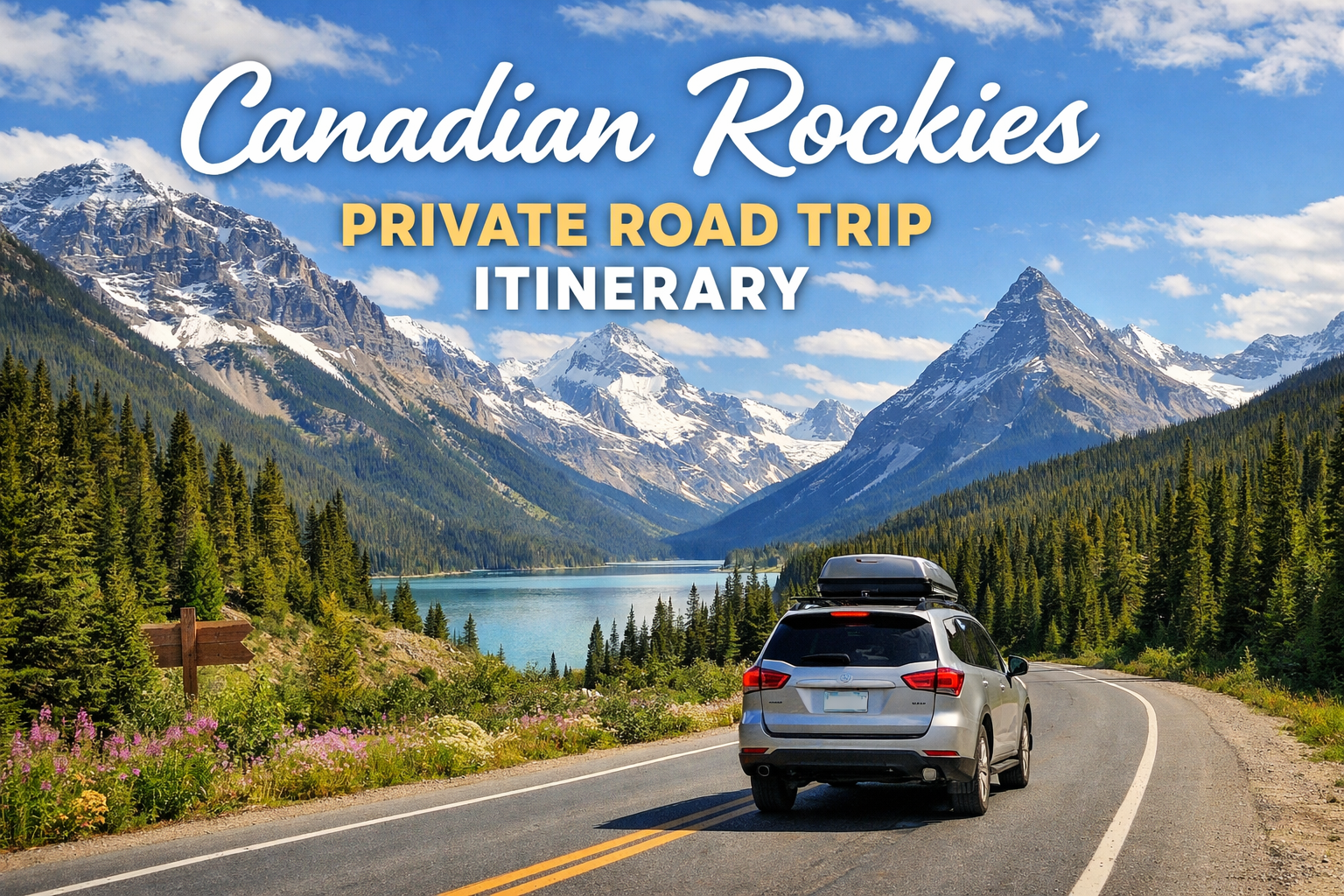
Planning a private road trip through the Canadian Rockies is one of those decisions that sounds simple until you actually start planning it. Where do you fly in? Do you need shuttle reservations for Moraine Lake? Can you still drive to Lake Louise? What roads actually close in early June? Most articles online give you the same looping list of attractions without telling you how to move between them without losing half your day sitting in traffic or arriving too late for a decent sunrise photo.
This guide from Vista Chase is different. It is built around the reality of how these roads, parks, and access systems actually work in 2026, not how they worked five years ago. We cover a 10-day private road trip route that starts and ends in Calgary, threads through Banff, Yoho, Jasper, and Kananaskis, and gives you honest, specific guidance at every stop.
No filler. No generic tips. Just what you actually need to know before you get in the car.
Why a Private Road Trip Is the Best Way to See the Canadian Rockies
Guided Private tours in the Canadian Rockies are comfortable. They are also limiting. You share a schedule with a dozen other people, you stop where the driver stops, and you miss the moments that only happen when you have the freedom to pull over on an empty stretch of the Icefields Parkway and sit with the silence for ten minutes.
A private road trip gives you control over timing, which matters enormously here. The best light at Moraine Lake happens between 6:30 and 8:00 AM. Wildlife sightings on the Bow Valley Parkway peak at dusk and dawn. If you are on a tour bus leaving the hotel at 9:00 AM, you miss both.
You also get to decide how long to stay somewhere. Some people spend 20 minutes at the Columbia Icefield and move on. Others want two hours. A private itinerary lets you build that flexibility in.
Before You Book Anything: 2026 Access Rules You Must Know
The Canadian Rockies have changed significantly in terms of how visitors access certain areas. Ignoring these rules will ruin specific days of your trip, so read this section carefully.
Moraine Lake access: You cannot drive to Moraine Lake independently during peak season. Access is by shuttle only, operated through Parks Canada or approved private operators like Moraine Lake Bus Company. Shuttle reservations typically open in mid-April for the summer season. If you are travelling between late June and early September and have not booked a shuttle, you may not get to Moraine Lake at all. Book as soon as reservations open.
Lake Louise parking: You can drive to Lake Louise, but parking now costs $42 CAD per day during peak season. Many visitors choose to take a shuttle or arrive before 7:00 AM when spots are more available.
Parks Canada Pass: If your trip falls between June 19 and September 7 in 2026, Parks Canada has implemented a free access period for national parks. Outside of those dates, you will need to purchase a pass at the Banff National Park gate. The Discovery Pass, which covers all Canadian national parks for a year, is worth it if you plan to spend more than 5-6 days inside the parks.
Kananaskis Conservation Pass: This is a separate provincial pass required for Kananaskis Country. Buy it online before your trip or at a Kananaskis Visitor Centre.
Jasper National Park trails: A wildfire in 2024 affected parts of Jasper. Several trails were closed for rehabilitation throughout 2025. Valley of the Five Lakes is expected to reopen for the 2026 season, but always check Parks Canada's website for updated trail status before you go.
Where to Fly In and What to Rent
Fly into Calgary International Airport (YYC). It is the closest major hub to Banff and gives you the most convenient start and end point for the loop itinerary below. Edmonton is an option if you want to start from Jasper, but most travellers find Calgary a more logical base.
Rent a car, not an RV, for your first visit. Campervans and motorhomes work well in the Rockies but require advance campsite bookings, limit your parking options at major attractions, and add complexity to an already full itinerary. A standard mid-size SUV with all-wheel drive is ideal. Snow can appear on higher elevation roads even in late June, so avoid compact cars.
Pick up your rental in Calgary. Book months in advance if you are travelling in July or August. Availability tightens fast, and prices spike closer to travel dates.
The 10-Day Canadian Rockies Private Road Trip Itinerary
This route covers approximately 1,100 km of driving, spread across 10 days. Driving days are kept intentionally short so you spend more time outside the car than in it.
Day 1: Calgary to Canmore (1 hour 10 minutes)
Most people drive straight from Calgary to Banff on their first day. The Vista Chase recommendation is to stop in Canmore first. It sits just 15 minutes east of the Banff National Park boundary and gives you a proper mountain town experience without the tourist saturation that Banff carries in peak season.
Walk along the Bow River, get a look at the Three Sisters peaks from the viewpoint on Spray Lakes Road, and have a slow dinner. Canmore has genuinely good restaurants, locally run coffee shops, and a pace that lets you decompress from a long travel day before the big park experience begins.
Where to stay in Canmore: The Malcolm Hotel is a solid mid-range option with mountain views. Basecamp Resorts Canmore offers apartment-style suites, which work well if you are travelling as a couple or small group and want a kitchen.
Vista Chase tip: If you are arriving late from an international flight, Canmore is also far easier to navigate than Banff at night. Save the Banff arrival for Day 2 when you are fresh.
Day 2: Canmore to Banff (30 minutes) with a full day in the park
Drive into Banff National Park in the morning and pay your park entry fee if you are outside the free access window. The town of Banff sits on Banff Avenue, a walkable main street with restaurants, shops, and the visitor centre.
Start the morning with a short hike up Tunnel Mountain. It takes about 45 minutes to the summit and gives you a panoramic view over the town, the Bow River valley, and the surrounding peaks. It is not the most challenging hike in the park, but it is the right introduction on an arrival day.
After the hike, drive to the Surprise Corner viewpoint for the classic Banff Springs Hotel shot. Then take a walk down to Bow Falls. Both are free, quick, and genuinely worth doing.
In the afternoon, ride the Banff Gondola up Sulphur Mountain if it fits your budget. The views from the summit boardwalk stretch across the Bow Valley in all directions and are especially good in the late afternoon light.
End the day with a soak at Banff Upper Hot Springs. It closes at 10:00 PM and the evening sessions are less crowded than daytime visits.
Where to stay in Banff: The Fairmont Banff Springs is the classic choice and genuinely lives up to its reputation as the "Castle in the Rockies." For something more affordable without sacrificing location, look at Moose Hotel and Suites on Banff Avenue.
Day 3: Banff to Lake Minnewanka and back, via Cave and Basin
This is a slower, more exploratory day that most generic itineraries skip entirely.
Start at Cave and Basin National Historic Site. It is the birthplace of Canada's national parks system, built in the late 1800s around a naturally occurring hot spring. The interpretive exhibits are genuinely interesting, not just for history buffs, and the boardwalk around the thermal waters takes about 30 minutes.
From there, drive to Lake Minnewanka, the largest lake in Banff National Park. Take the boat cruise out toward Devil's Gap. The route passes through a drowned valley, with submerged sections of an old town visible in the clear water on calm days. It is one of the most underrated experiences in the park and a sharp contrast to the more crowded lake experiences elsewhere.
In the afternoon, walk along the Bankhead trail loop near the eastern shore of Lake Minnewanka. You will pass the remnants of a coal mining town that operated here in the early 1900s, now slowly being reclaimed by the forest.
Vista Chase tip: The north shore of Lake Minnewanka in the early evening is a reliable spot for elk and deer sightings. Drive slowly and keep your eyes on the treeline.
Day 4: The Bow Valley Parkway and Johnston Canyon
Do not drive the Trans-Canada Highway today. Take the Bow Valley Parkway, also called Highway 1A, which runs parallel to the Trans-Canada between Banff and Lake Louise. It is 50 km of the original road built in the early 1900s and is now one of the best wildlife corridors in the park.
The parkway has a reduced speed limit for most of its length to protect wildlife. This is not just bureaucratic caution. Wolves, elk, moose, coyotes, bears, and deer all regularly cross this road. Drive slowly. Stop often. Have your camera ready before you need it.
Pull into Johnston Canyon about a third of the way along the parkway. The lower falls are a 1.1 km walk along a canyon catwalk bolted into the cliff face above the rushing water. The upper falls add another 1.5 km and are significantly less crowded. If you are feeling ambitious, continue another 3 km to the Ink Pots, a collection of cold springs that produce vivid turquoise and green water. The full round trip to the Ink Pots takes around 4 hours but is the best version of this trail.
Continue north to Lake Louise in the afternoon. Walk the shoreline of Lake Louise itself in the late afternoon, when most of the tour groups have left and the light goes golden against Victoria Glacier.
Where to stay near Lake Louise: The Fairmont Chateau Lake Louise is expensive but positioned directly on the water. Post Hotel and Spa is the best mid-range alternative in the area.
Day 5: Moraine Lake and Lake Louise Highlights
This day is built around your shuttle reservation, so the timing depends on what you booked.
Moraine Lake in the early morning, before 8:00 AM, is one of the most photographed scenes in Canada for a reason. The ten peaks reflected in that specific shade of blue-green water are not something photographs fully prepare you for. Get on the first possible shuttle. Spend at least an hour at the lake, including a walk up the Rockpile for the elevated view.
In the afternoon, if you have energy and daylight, hike toward Larch Valley from the Moraine Lake trailhead. The valley is about 4.3 km one way and climbs steadily through forest before opening into an alpine meadow. In early autumn the larch trees turn yellow and the valley becomes one of the most dramatic hikes in the entire park system. In summer it is still outstanding.
Vista Chase tip: Book your Moraine Lake shuttle for an early morning departure on this day. The later shuttles still get you there, but morning light and fewer crowds make the experience significantly better.
Day 6: Drive the Icefields Parkway (Lake Louise to Jasper, 230 km)
This is the headline drive of the entire trip. The Icefields Parkway, Highway 93 North, runs from Lake Louise to Jasper and is consistently listed among the most beautiful drives in the world. Set aside a full day. Do not rush it.
Start early from Lake Louise and plan on taking 8 to 9 hours to reach Jasper, including stops.
Key stops from south to north:
Bow Lake sits about 40 km north of Lake Louise and reflects the surrounding peaks in its glacier-fed water. Pull into the Num-Ti-Jah Lodge parking area and walk to the lakeshore. It is often quieter than the more famous lakes further south.
Peyto Lake viewpoint requires a 1 km walk from the parking area to the famous wolf-head shaped lake overlook. Go early. The viewpoint is one of the most photographed in the Rockies and crowds build quickly after 9:00 AM.
Mistaya Canyon is a short 15-minute walk from the highway down to a narrow canyon carved by the Mistaya River. Most people miss it because the parking lot is easy to pass. Look for it about 72 km north of Lake Louise.
Columbia Icefield is the largest accumulation of ice south of the Arctic in North America. The Athabasca Glacier extends right down to the road. Walk to the glacier's edge on the free trail for 30-40 minutes. If budget allows, book the Ice Explorer tour, which takes you out onto the glacier in a specialized vehicle. The Columbia Icefield Skywalk, located 5 km south of the main center, extends over a cliff edge and provides remarkable views down the glacial valley.
Athabasca Falls is 30 km south of Jasper. The falls are powerful and the canyon around them is narrow and dramatic. Spend 30 to 45 minutes here.
Arrive in Jasper in the late afternoon. The town is smaller and quieter than Banff, with a local population that gives it a more genuine mountain community feel.
Where to stay in Jasper: Fairmont Jasper Park Lodge sits on the shores of Lac Beauvert and provides a classic mountain resort experience. For something more central, The Crimson Jasper on Connaught Drive puts you in walking distance of all the town's restaurants and shops.
Day 7: Full Day in Jasper National Park
Jasper is smaller in tourist infrastructure than Banff, which makes it easier to spread out and find space.
Morning: Drive the Maligne Lake Road, which starts just east of town and covers about 45 km one way to Maligne Lake. Your first stop is Maligne Canyon, roughly 7 km from town. The canyon walk descends through a series of bridges over the narrow gorge and takes about 1 to 2 hours.
Continue to Medicine Lake, which locals call the disappearing lake because its water level drops dramatically in winter when the underground drainage system takes over. Even in summer, the difference in water level from one end to the other is visible.
End the drive at Maligne Lake itself, the largest natural lake in the Canadian Rockies. If Spirit Island and the lake cruise are on your list, book the boat tour in advance. The cruise takes about 90 minutes and delivers you to the famous Spirit Island view that has appeared on countless postcards.
Afternoon: Return toward Jasper town and drive the Pyramid Lake Road north of town. The Hanging Valley Viewpoint at kilometer 6 is easy to miss but provides an excellent view over the Athabasca Valley with Pyramid Mountain behind it.
Vista Chase tip: If you are a hiker looking for a full-day trail in Jasper, the Sulphur Skyline Trail is 8 km return with 700 m of elevation gain and provides 360-degree mountain views from the summit. Check trail status before going, as Jasper park trails have had some closures following the 2024 wildfire.
Day 8: Jasper to Yoho National Park via the Icefields Parkway South (3 hours without stops)
Reverse part of your Icefields Parkway drive, but stop at different pull-offs on the way back south. The parkway looks completely different in the opposite direction and at a different time of day.
Leave Jasper by 8:00 AM. Stop at Sunwapta Falls, 55 km south of Jasper, which you may have passed quickly yesterday. The upper and lower falls are both accessible within a short walk.
Continue south past the Columbia Icefield and turn off toward Field in Yoho National Park. The road to Field branches off the Trans-Canada just west of Lake Louise.
Yoho is consistently undervisited relative to its quality. Emerald Lake is the main draw, and the color of the water is distinct from Moraine Lake or Lake Louise, more vivid green than turquoise. Walk the 5.2 km loop around the lake or simply sit on the dock in front of the Emerald Lake Lodge for an hour.
Takakkaw Falls, accessible via a narrow winding road north of Field, is the second-highest waterfall in Canada. The drive is not suitable for trailers or large vehicles. The walk from the parking lot to the base of the falls takes about 20 minutes.
Where to stay in Yoho: Emerald Lake Lodge is one of the most atmospheric accommodation choices in the entire Rockies region. Book it well in advance. Cathedral Mountain Lodge is a strong alternative with private cabins.
Day 9: Yoho to Kananaskis (2 hours from Field)
Drive east from Field back toward Calgary, but turn off at Highway 40 into Kananaskis Country rather than continuing straight into the city.
Kananaskis is a provincial park, not a national park, which means different rules and a different access fee structure. The Kananaskis Conservation Pass is required for all vehicles entering the region.
The scenery in Kananaskis is less trafficked than the national parks and no less dramatic. The Upper and Lower Kananaskis Lakes are a centerpiece of the region. Drive the road along the eastern shore and take a walk along the lakeside trail.
If time and fitness allow, attempt the Sarrail Ridge trail from the Upper Kananaskis Lake trailhead. It is a 11 km return hike that becomes a scramble near the top, with panoramic views of the lakes and surrounding peaks.
Ha Ling Peak above Canmore is a 6 km return hike that gains 737 m of elevation and takes most people 2 to 3 hours to the summit. The view from the top down over the Bow Valley is excellent.
Where to stay: Basecamp Resorts in Canmore, or the Pomeroy Kananaskis Mountain Lodge for a more resort-style experience within the park itself.
Day 10: Kananaskis/Canmore to Calgary (1 hour 10 minutes)
Your last morning in the mountains. If you have an afternoon or evening flight from Calgary, you have time for one final slow morning.
Spend it on the Canmore Bow River Trail, walking the path out to the Canmore Engine Bridge. The view of the old railway bridge with the Three Sisters rising behind it is a final, quiet farewell to the mountains.
Return your rental car in Calgary, grab lunch in the city's East Village neighborhood, and get to YYC with time to spare.
Practical Information for 2026
Best time to travel: July and August are peak season, with the best weather and all facilities open, but also the largest crowds. June and September offer significantly fewer people with only slightly compromised weather. September, in particular, is exceptional as the larch trees begin turning yellow and the light becomes golden and cool.
Booking timelines: For July and August travel, book accommodation at least 3 to 4 months in advance. Banff and Lake Louise fill at 80% capacity months before arrival dates. Moraine Lake shuttles should be reserved as soon as they open in mid-April.
Weather: The Canadian Rockies have genuinely unpredictable weather. Snow is possible at any time of year above 2,000 m. Pack waterproof layers and merino wool base layers even in summer. A warm midlayer for early mornings at high elevation viewpoints is not optional.
Bear safety: Bear spray is not optional. Buy it at the Banff Convenience Store or a sporting goods shop in Calgary on arrival. Carry it on every trail walk. Most stores in the area will buy back unused canisters at the end of your trip.
Wildlife: The Canadian Rockies have grizzly bears, black bears, elk, moose, bighorn sheep, mountain goats, wolves, and coyotes. All of them can appear anywhere along the roads and trails. Keep your distance, never feed wildlife, and never approach for a closer photo. Wildlife corridors along the Bow Valley Parkway and Maligne Lake Road are the most reliable areas for sightings.
Fuel: Fill up in Banff, Lake Louise, and Jasper. The Icefields Parkway has a gas station at the Columbia Icefield, but it is not always open. Do not assume you can refuel between Lake Louise and Jasper without planning ahead.
Mobile signal: Expect spotty to nonexistent mobile coverage along significant portions of the Icefields Parkway and in parts of Yoho and Kananaskis. Download your maps offline before leaving a town.
The Pursuit Pass: Is It Worth It?
Several of the paid experiences on this itinerary, including the Banff Gondola, Columbia Icefield Explorer tour, Columbia Icefield Skywalk, Maligne Lake Cruise, Lake Minnewanka Cruise, and the Golden Skybridge near Golden, are bundled under the Pursuit Pass.
For 2026, the Pursuit Pass Rockies option runs approximately $275 CAD per person. If you plan to do three or more of those experiences, the pass saves money and simplifies logistics by letting you select time slots in advance.
Book the pass early and assign your activity times as soon as your itinerary is confirmed.
Frequently Asked Questions
Do I need to book everything in advance for a Canadian Rockies road trip?
For a summer trip, yes. Accommodation, Moraine Lake shuttles, and popular tours fill months ahead. For a September trip, you have more flexibility, but accommodation in Banff and Jasper should still be booked at least 6 to 8 weeks out.
Can I do the Canadian Rockies road trip without a car?
It is possible to piece together an itinerary using the Banff Roam bus system, shuttles, and guided tours. But you lose flexibility on timing, and some of the best experiences on this itinerary, including the Bow Valley Parkway and the Kananaskis drive, are essentially impossible without your own vehicle.
How far is Calgary from Banff?
The drive from Calgary International Airport to Banff town is approximately 1 hour 30 minutes, around 130 km, on the Trans-Canada Highway.
Is the Icefields Parkway safe to drive?
Yes, for a standard car with a normal level of driving confidence. The road is well-maintained. Wildlife is present and some sections have tight curves, so moderate your speed. In late May and early June, check for ice on the higher sections.
What happened to Jasper after the 2024 wildfire?
The wildfire in 2024 affected parts of the Jasper townsite and surrounding forest. Some trails remained closed through 2025 for rehabilitation. By 2026, most major trails, including Valley of the Five Lakes, are expected to be open. Always verify current trail status on the Parks Canada website before your visit.
Final Word from Vista Chase
The Canadian Rockies will give you exactly as much as you are willing to let them. If you drive from viewpoint to viewpoint, tick off the famous lakes, and leave, you will have seen something beautiful. But if you slow down, take the less obvious road, stay until the light changes, and let the schedule breathe a little, you will understand why people come back to this part of the world again and again.
This itinerary is a framework. Use the parts that work for your group and the time you have. Move things around. Add a rest day in Banff if the mountain air is too good to leave. Spend an extra night in Yoho. Cut Kananaskis if Jasper deserves more of your time.
The road belongs to you. Vista Chase just helped you plan where it starts.
Vista Chase specializes in private road trip planning for independent travelers. For custom itineraries, route planning resources, and accommodation recommendations across the Canadian Rockies and beyond, explore our travel guides at vistachase.com.